Alwin Goh
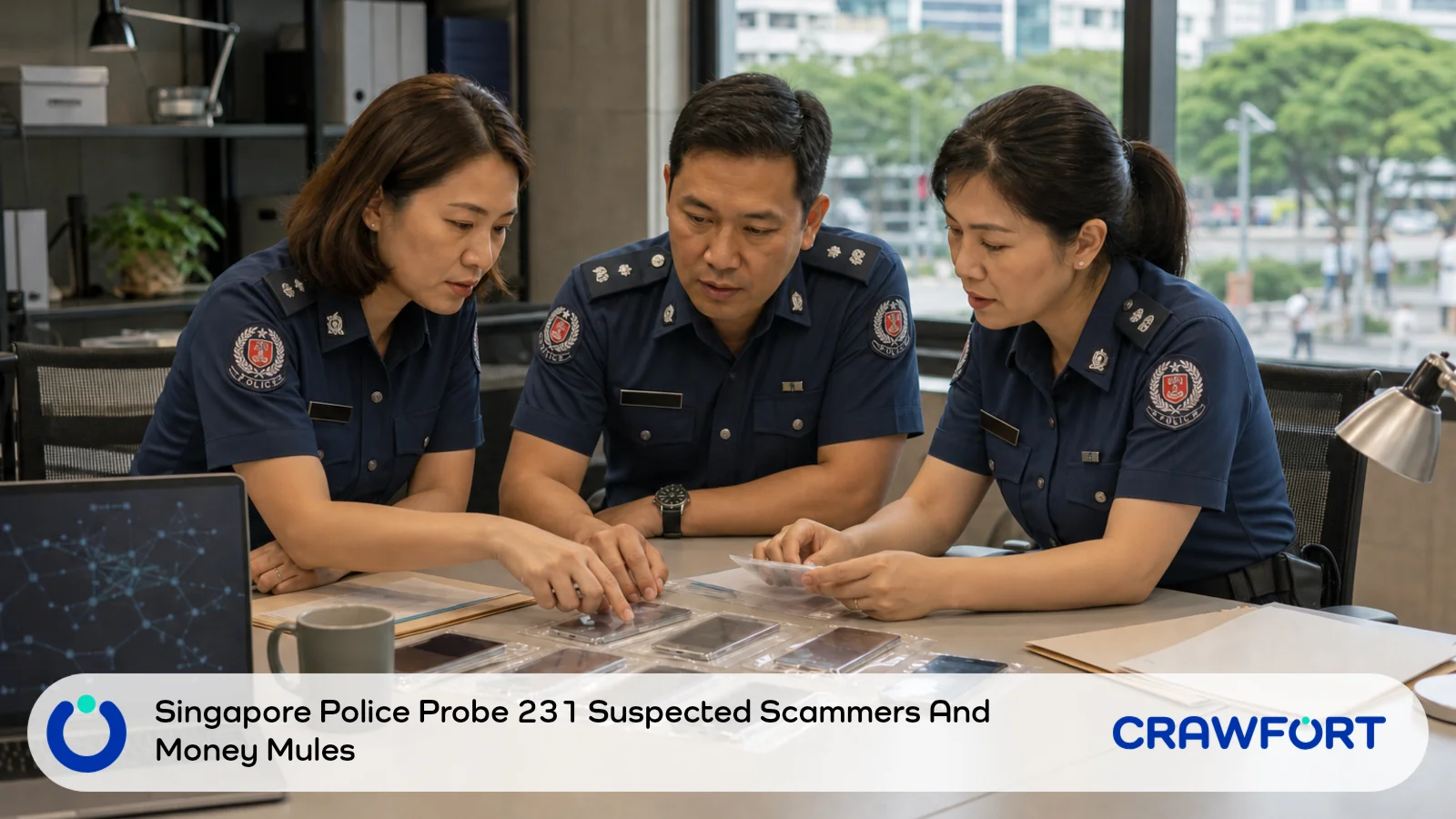
The Singapore Police are investigating 231 people following an islandwide operation against suspected scammers and money mules conducted between 13 and 26 August 2026. The 149 men and 82 women are believed to be linked to at least 721 scam cases, in which victims lost about S$4.1 million.
All 231 are assisting with investigations. Being identified in the operation does not mean they are guilty, and any charges or sentences would depend on the evidence and the outcome of court proceedings.
Table of Contents
What The Police Operation Found
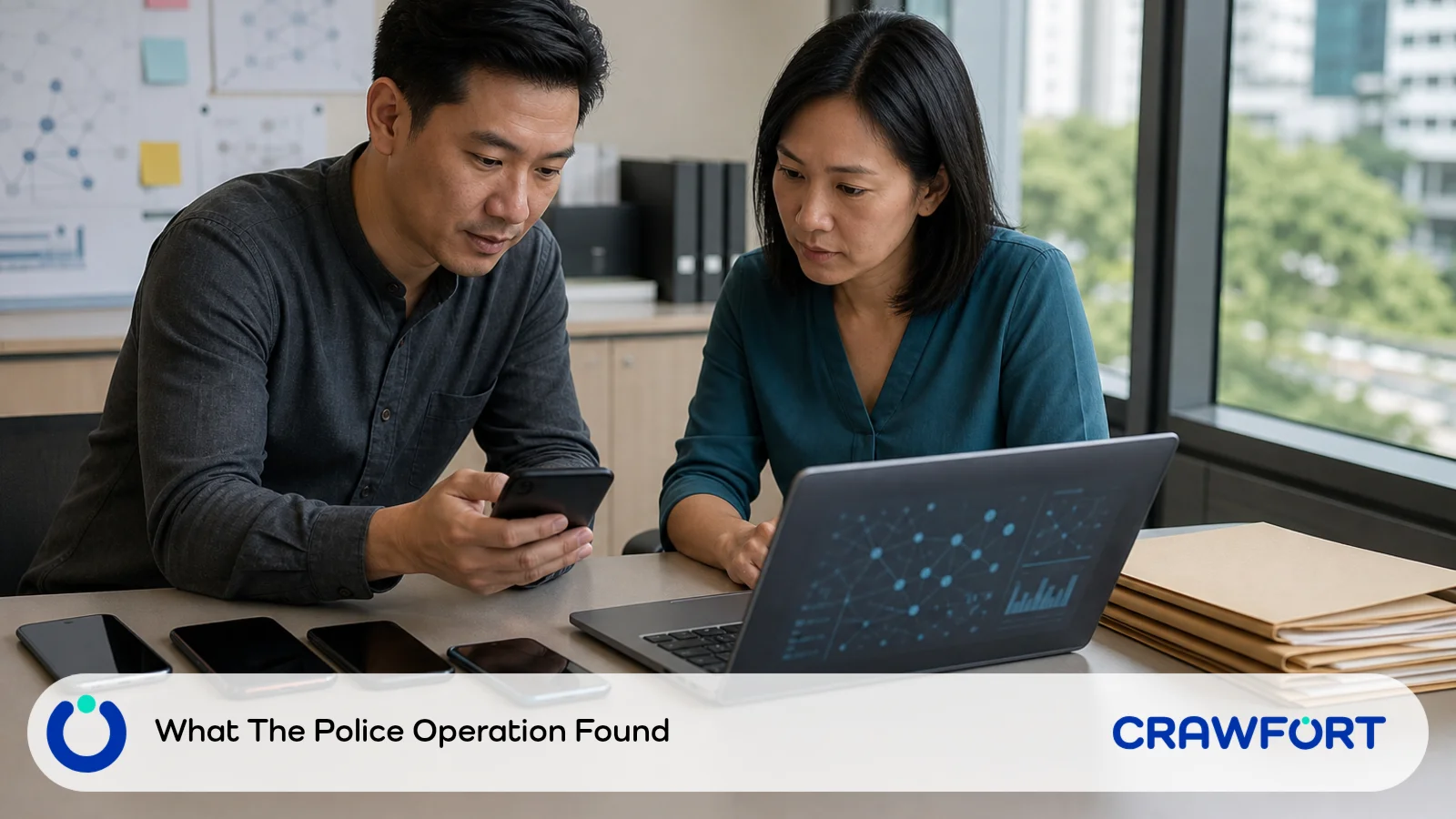
The two-week operation ran from 13 to 26 August 2026 and involved officers from the Cyber Command and all seven Police Land Divisions. The Singapore Police Force said on 27 August that the youngest person under investigation is 15 and the oldest is 76.
Investigators are looking into suspected involvement in e-commerce, phishing, job, government official impersonation, investment and lucky draw scams. The wide range of scam types shows that money mules are not tied to a single method. One bank account, SIM card or Singpass credential can be used for a fake job advert one week and a bogus investment platform the next. This makes these resources useful to scam syndicates.
Enforcement has increasingly focused on the people and resources that support scams, as well as those who directly approach victims. Authorities may take action against the person who makes the approach, as well as those who provide accounts and phone lines used to carry out the scams.
Also Read: Scam and Illegal Moneylending Crackdown in Singapore
Why Money Mules Matter In Scam Investigations
A money mule allows an account or other facility under their control to be used to receive, move or withdraw criminal proceeds. Syndicates want more than bank accounts. A local mobile line or a set of Singpass credentials can be used to reach victims, open further accounts or make an approach appear to come from someone in Singapore.
It is a supporting role, which is partly why some people may underestimate the risks. However, these accounts and facilities can play an important part in making scams work. Each local account that money passes through adds another layer between the victim and the person or group running the operation. A +65 number can serve a similar purpose by making a message or call appear more local and potentially more trustworthy.
The offer rarely presents itself as criminal activity. It may come as a commission for very little effort, a “payment processing” role advertised on a job platform, a favour for someone met online or an offer to rent out an unused account. The warning signs are often similar. Be cautious of unsolicited approaches that eventually ask for your credentials or remote access to your device.
Also Read: How To Protect Yourself From Personal Loan Scams In Singapore
What Offences And Penalties Are Being Investigated
The police said the offences being investigated include cheating, money laundering and providing payment services without a licence. This does not mean that everyone is suspected of all three offences.
The penalties vary. Cheating under Section 420 of the Penal Code carries up to 10 years’ imprisonment and a fine. Money laundering can carry up to 10 years’ imprisonment, a fine of up to S$500,000, or both. Providing payment services without a licence can carry up to three years’ imprisonment, a fine of up to S$125,000, or both.
Since 30 December 2025, caning has also applied to certain scam-related offences. Scammers, syndicate members and recruiters may face six to 24 strokes, while some money mules may face up to 12 strokes at the court’s discretion. Caning does not apply to women and generally does not apply to men aged 50 or older.
These are the penalties allowed under the law. What each person may face will depend on the charges, evidence and outcome of the court proceedings.
How The Facility Restriction Framework Works
Legal penalties are not the only possible consequences. The Facility Restriction Framework, introduced by the SPF, MAS, IMDA and GovTech, can restrict access to services that could be used for scams. These include internet banking, PayNow, card transactions, ATM withdrawals and new mobile lines. Singpass and Corppass restrictions will be introduced in a later phase. The restrictions and how long they last depend on the risk posed by the individual, while basic financial and communication needs are also considered.
The framework can apply to people who have been warned, issued composition sums, prosecuted or convicted. It can also apply to people who are still under investigation if they are considered likely to facilitate further scams. Police said some suspected mules continued applying for new mobile lines and selling them. Nearly 15 per cent of subscribers whose lines were used for scams in 2025 were repeat offenders, accounting for more than 11,000 lines.
Being under investigation does not automatically mean these restrictions will apply. Police will notify affected individuals, who can also appeal against the restrictions.
How To Avoid Becoming A Money Mule
The safest rule is simple. Do not let anyone else control an account or mobile line registered in your name. This applies even if the account is empty, the mobile line is unused or the request comes from someone you only know online.
Reject Requests To:
- receive or transfer money for an unknown person or supposed employer;
- hand over an ATM card, banking password, one-time password or device access;
- open a bank account or mobile line for someone else;
- share Singpass credentials or approve an unfamiliar Singpass request; or
- accept a commission for allowing transactions through your account.
If a loan offer asks for access to your account, an upfront payment or an unusual transfer, stop and check who is contacting you. You should also verify that the lender is properly licensed. This guide explains the difference between a licensed and unlicensed moneylender.
Also Read: Scam Alert: How To Recognise A Fake Crawfort Website
What To Do If You Have Shared Access
Act quickly if you have already shared your account details, mobile line, Singpass access or device. Contact your bank or service provider, explain what happened and follow their security instructions. Change affected passwords using a trusted device and do not transfer suspicious funds on someone else’s instructions.
Keep any messages, phone numbers, transaction records and account details related to the incident. Do not delete them before making a report, as they may help with the investigation. You can also call the ScamShield Helpline at 1799 for scam-related advice or provide information to the Police through the channels listed in the SPF release.
Also Read: Loan Scams: Do Not Become The Next Victim
What The Public Should Take Away
The investigation into 231 people shows how scams can involve everyday services such as bank accounts, mobile lines and digital identities. A request to lend or rent an account, or to help process payments, should be treated as a warning sign.
Keep control of all accounts and credentials registered in your name. If you have already shared access, secure your account, keep any evidence and report the incident as soon as possible.
Review Note: This article was checked against Singapore Police Force releases available on 28 August 2026.