Alwin Goh
A quick payment for receiving money, transferring funds or lending someone a bank account may sound like an easy side income. It can also place the account holder in the middle of a scam or unlicensed moneylending investigation.
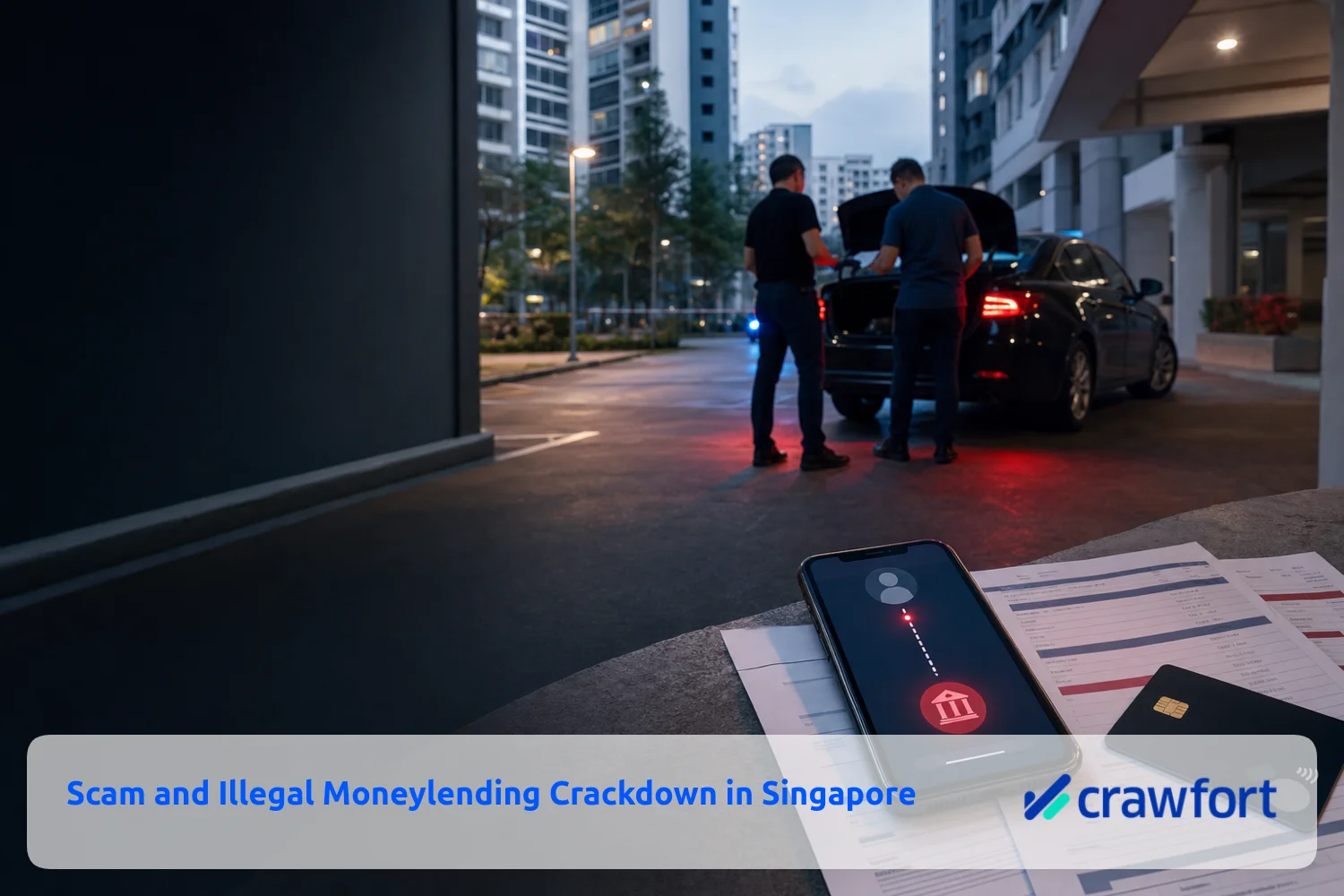
That risk came into focus after a 10-day police operation involving 550 people aged between 16 and 83. The scale of the crackdown, and the involvement of teenagers, shows why everyone should understand what they are agreeing to before sharing access to a financial or digital account.
What Happened During The Crackdown?
According to the Singapore Police Force statement on the crackdown, officers from Bedok Police Division conducted enforcement activities from 29 June to 8 July 2026.
The 341 men and 209 women under investigation were allegedly connected to more than 1,800 cases involving scams and unlicensed moneylending.
Of the 550 people:
- Around 418 were suspected of involvement in scam-related activities, including e-commerce, investment, job, rental, phishing and loan scams.
- These scam cases reportedly caused losses exceeding S$14.8 million.
- Another 132 people were being investigated over alleged involvement in unlicensed moneylending activities.
- The moneylending-related transactions reportedly exceeded S$2.3 million.
Being investigated does not mean that a person has been convicted. However, the figures illustrate how scammers and illegal moneylending syndicates depend on large networks of account holders, intermediaries and runners to move money and conceal where it came from.
How Ordinary Accounts Become Part Of A Criminal Network
A person does not need to design a scam or personally approach a borrower to become involved.
Syndicates may recruit people to:
- Receive money through a personal bank account
- Transfer funds to another account or withdraw them from an ATM
- Hand over an ATM card, PIN or internet banking token
- Register or surrender a mobile phone line
- Share a Singpass access code
- Open an account on someone else’s instructions
These arrangements are often presented as administrative work, payment processing or a fast-paying part-time job. The recruiter may claim that the account is needed because a company’s payment system is unavailable or because a client cannot receive funds directly.
Those explanations should not be accepted at face value. A legitimate employer should not require an employee to move unknown customers’ money through a personal bank account.
Why Sharing A Bank Account Is Not A Harmless Favour
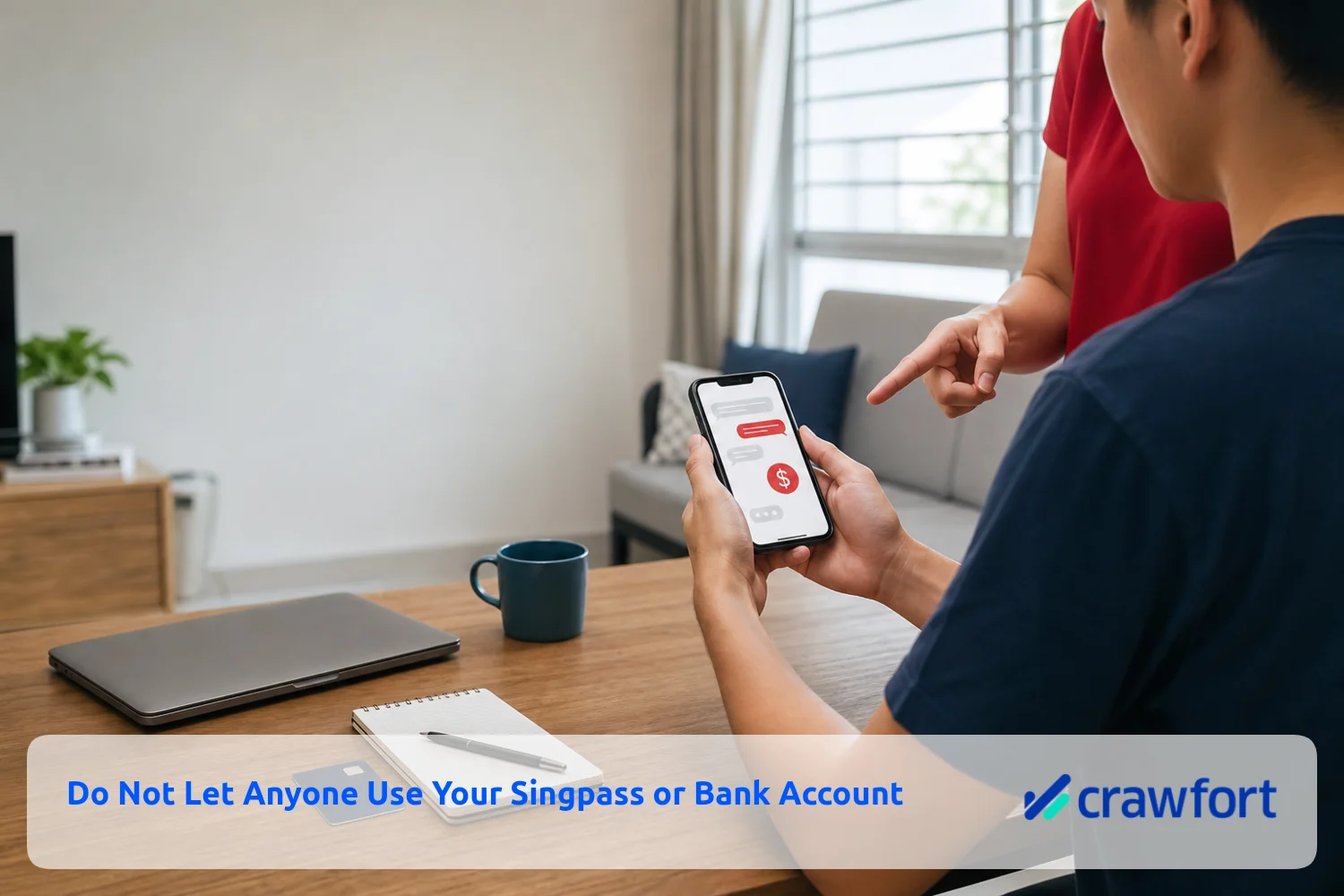
Once an account receives criminal proceeds, the account holder may have difficulty explaining why the transactions occurred or who controlled the money.
For unlicensed moneylending, Singapore Police Force guidance states that a person may be presumed to have assisted the business when their bank account, ATM card or internet banking token is used to facilitate it. Recent police action against suspected unlicensed moneylending activities has also highlighted the risks of providing bank accounts, mobile numbers and transfer facilities to syndicates.
Consequences may extend beyond criminal investigation. An individual could lose access to banking facilities, have funds frozen during enquiries or become responsible for explaining transactions made through their account.
Never disclose a Singpass password or one-time password. Singpass provides access to government and private-sector services, so giving another person control can expose far more than a single bank transaction.
How Unlicensed Moneylenders May Approach Borrowers
Unlicensed moneylenders often contact prospective borrowers through unsolicited messages, social media or messaging applications. They may offer quick loans without proper checks, request an upfront payment or ask the borrower to conduct transactions on their behalf.
That is different from borrowing from a licensed moneylender. Before providing personal information or considering a loan, check the lender against the Ministry of Law’s list of licensed moneylenders.
Readers can also review how a licensed moneylender operates, learn the common warning signs of personal loan scams and follow these steps to check whether a lender is licensed.
A message claiming to represent a familiar lender should still be verified independently. Do not rely on a website, phone number or licence information supplied by the person contacting you. Scammers can copy business names, logos and registration details from legitimate organisations.
Warning Signs Of A Scam Or Money Mule Offer
Stop communicating and verify the situation if someone:
- Promises fast payment for receiving or transferring money
- Asks to borrow or rent your bank account
- Wants your ATM card, PIN, banking token or Singpass details
- Tells you to hide the arrangement from your bank or family
- Pressures you to act before you can check the offer
- Sends a loan offer through an unsolicited message
- Requests an upfront payment before releasing a loan
- Claims that transferring money is needed to activate a job or commission
Teenagers and young adults can be particularly vulnerable to offers framed as simple online work. Parents and caregivers should explain that a person remains responsible for how their account is used, even if somebody else initiated the transactions.
What To Do If You Have Already Shared Access
Act quickly. Delaying may allow further transactions to pass through the account.
- Stop all communication and do not transfer any more money.
- Contact your bank immediately to secure the account and report suspicious transactions.
- Change compromised passwords and review your Singpass account.
- Preserve messages, transaction records, usernames and phone numbers.
- Make a police report and provide the records you have kept.
- Contact the ScamShield Helpline at 1799 if you need scam-related guidance.
Do not confront the suspected scammer or moneylender. If there is an immediate threat, call the Police at 999.
A Small Favour Can Carry Serious Consequences
The latest crackdown demonstrates that scam and unlicensed moneylending networks do not operate through a few visible organisers alone. They rely on many accounts, phone lines and individuals to keep money moving.
Refuse any request to share Singpass credentials, bank access or mobile facilities, even when the payment offered seems attractive or the person making the request is someone you know. If an offer cannot withstand a basic identity check and an independent explanation from your bank, it is not worth the risk.
And if you do need money, you have safe options. Licensed moneylenders operate under Ministry of Law rules with capped interest, transparent terms and face-to-face verification, which is precisely the friction that keeps you protected. Banks are another route worth comparing, with their own trade-offs on speed, eligibility and loan size. It’s worth checking whether you’re eligible for a personal loan in Singapore before you apply anywhere.
Important note: This article is for general information only and does not constitute legal or financial advice. Verify any prospective moneylender through the Ministry of Law’s official registry and make sure any borrowing is necessary and manageable.