

 Alwin Goh
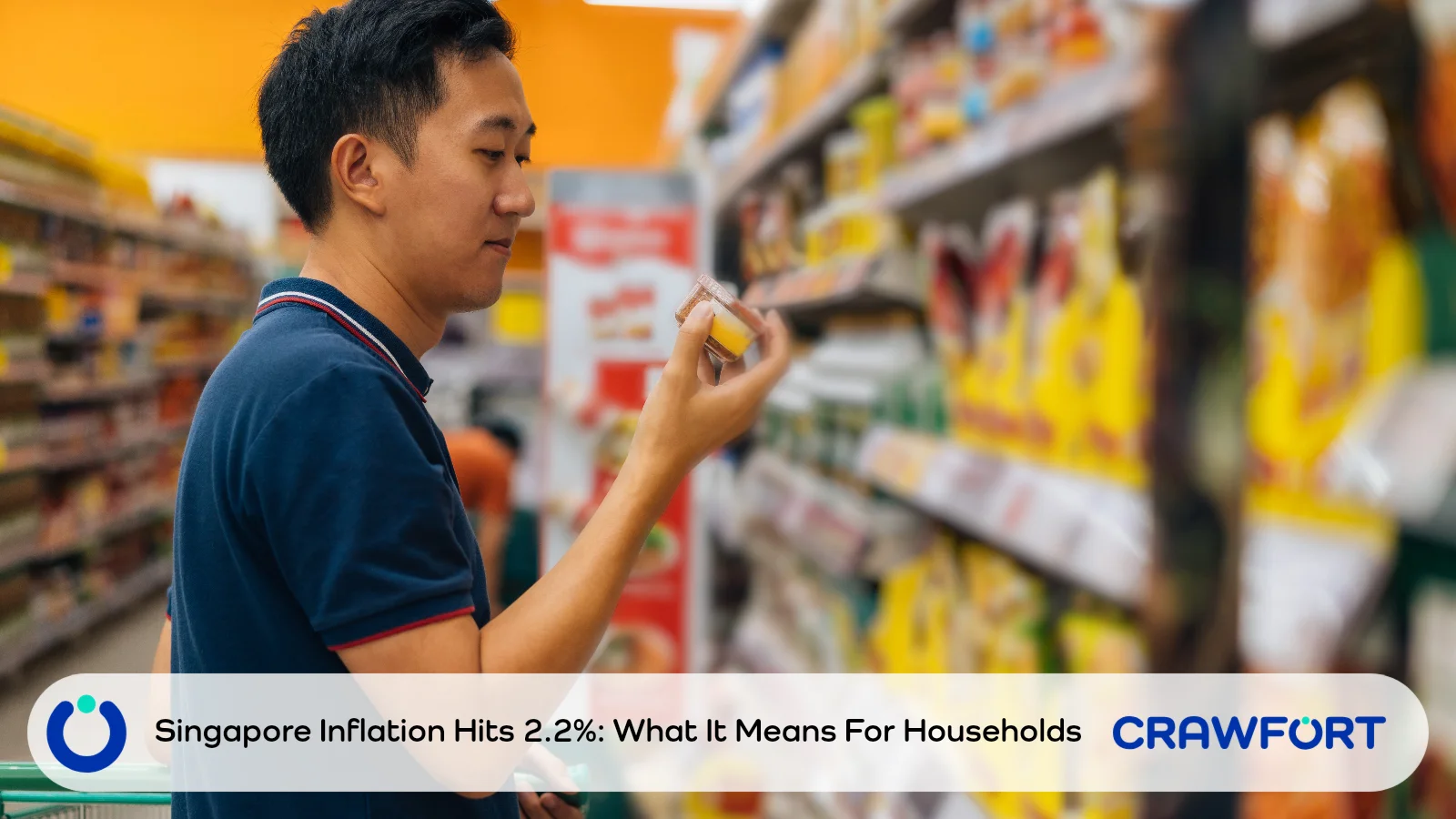
Singapore’s headline inflation rose in July 2026, with several major household expenses recording faster price increases.
All-items inflation climbed to 2.2% year on year, its highest level in nearly two years, while MAS core inflation increased to 2.0%. Both figures were below economists’ forecasts.
The lower-than-expected readings, however, do not mean household costs are falling. Prices for electricity and gas, food, services and accommodation rose at a faster pace in July, meaning households that spend more in these areas may experience greater cost pressure than the headline figure suggests.
It is also important to distinguish between year-on-year inflation and month-on-month price movements. A higher annual inflation rate means overall prices are higher than they were a year earlier. At the same time, the all-items Consumer Price Index (CPI) can decline slightly from the previous month.
The key figures below show both measures, providing a clearer picture of how consumer prices changed in July.
| July 2026 Indicator | Latest Reading | What It Means For Households |
|---|---|---|
| CPI-All Items Inflation | 2.2% year-on-year | The overall household consumption basket cost more than in July 2025 |
| MAS Core Inflation | 2.0% year-on-year | Underlying price pressure strengthened after excluding accommodation and private transport |
| CPI-All Items Monthly Change | -0.2% | The overall index dipped from June, despite remaining higher than a year earlier |
| Electricity And Gas Inflation | 8.7% year-on-year | Utility costs were the clearest source of renewed pressure |
| Food Inflation | 2.2% year-on-year | Food services and non-cooked food prices increased at a faster pace |
| 2026 Official Forecast | 1.5% to 2.5% | Both core and overall inflation are projected to average within this range for the year |
Table of Contents
What Does Singapore’s 2.2% Inflation Rate Mean?
The 2.2% figure represents the year-on-year change in Singapore’s Consumer Price Index (CPI) for all items. Put simply, the basket of goods and services tracked by the index cost 2.2% more in July 2026 than in July 2025.
This does not mean every household bill increased by 2.2%, or that all goods and services became more expensive at the same rate. The Singapore Department of Statistics’ explanation of the CPI states that the index tracks average price movements rather than absolute prices. The impact on individual households can therefore vary depending on what they spend their money on.
MAS core inflation provides a different measure of price pressures. It excludes accommodation and private transport costs, which can be volatile and are significantly influenced by administrative policies and supply conditions. This makes core inflation useful for assessing underlying price pressures across everyday goods and services.
The official July 2026 inflation release shows that MAS core inflation rose from 1.6% in June to 2.0% in July, while all-items inflation increased from 1.9% to 2.2%.
With both measures rising in July, the increase in inflation was not limited to accommodation and private transport. Price pressures also strengthened across other parts of household spending.
Why Did Singapore Inflation Rise In July 2026?
Electricity and gas made the most striking move. Inflation in this category reversed from a 2.9% decline in June to an 8.7% increase in July. The regulated electricity tariff rose in the third quarter, reflecting the earlier spike in global energy prices between April and mid-June.
The lag is easy to miss. A rise in global fuel prices does not always appear in a household bill immediately. Singapore’s regulated tariff is set using earlier natural gas prices, among other factors, so an external shock can take months to feed through.
Other categories added to the increase:
- Services inflation rose from 1.5% to 1.7% as airfares and point-to-point transport prices increased more quickly.
- Food inflation edged up from 2.1% to 2.2%, with faster increases in food services and non-cooked food.
- Accommodation inflation increased from 0.6% to 0.8% because of larger rises in rents and maintenance fees.
- Private transport inflation remained high at 8.0%, although it eased from 8.4% in June as petrol and diesel price increases moderated.
These figures do not imply that every category contributed equally to a family’s monthly expenses. They do show why a household may notice pressure across several bills at once rather than in one isolated purchase.
For a broader view of where common expenses sit, Crawfort’s guide to how the cost of living shapes an average monthly budget can help you sort fixed commitments from flexible spending.
Why Does Inflation Feel Different For Each Household?
The CPI represents resident households as a group; it is not a ready-made household budget. Your personal inflation rate depends on what you buy, how much you spend and whether the fastest-rising categories take up a large share of your expenses.
A family living in an HDB flat, cooking most meals at home and relying on public transport has a different cost profile from a household renting privately, driving regularly and travelling often. Even two families with the same income may feel the July increase differently.

Housing is a useful example. The all-items CPI includes accommodation, including imputed rent for owner-occupied homes. Imputed rent estimates the housing service homeowners receive from living in their own property; it is not a rent payment they make to themselves. SingStat notes that this component has no effect on the cash expenses of most homeowners.
Cash-flow pressure should therefore be assessed using actual bank transactions and bills, not the national percentage alone. Compare the latest two or three months with an earlier normal period and group the differences into utilities, groceries, eating out, transport and recurring services. This shows which increases are affecting you rather than the average household.
Does Undershooting Forecasts Mean Prices Are Easing?
No. The 2.2% all-items rate was below the 2.3% median forecast in a Reuters poll, while core inflation of 2.0% was below the 2.2% forecast. A forecast miss only means prices rose less quickly than economists expected.
It does not mean prices returned to earlier levels. Inflation measures the rate of change. When inflation is positive but slower than forecast, the overall price level is still higher than a year earlier.
There is another apparent contradiction: all-items inflation was up 2.2% year-on-year, but the index fell 0.2% month-on-month. Both can be true because they use different comparison periods. The annual figure compares July 2026 with July 2025; the monthly figure compares July with June 2026.
As CNA’s report on the July figures notes, core prices still rose 0.3% month-on-month. One softer all-items monthly reading is therefore not enough to establish a broad downward trend.
Also Read: How Inflation In Singapore Can Affect Loans
What Government Support Is Available?
Not every support measure is universal, so check the eligibility rules before counting a payment or rebate in your budget. The official Budget 2026 support summary lists measures announced in response to higher cost pressures, including:
- A S$400 to S$600 Cost-of-Living Special Payment for eligible adult Singapore citizens in September 2026.
- Up to S$190 in additional U-Save rebates for eligible HDB households, paid in October 2026 and January 2027.
- An additional S$300 in CDC Vouchers for every Singaporean household in January 2027.
- Enhanced ComCare Interim Assistance from August to December 2026 for lower-income households facing temporary financial difficulty.
The Cost-of-Living Special Payment is not based on the inflation rate alone. Eligibility includes age, citizenship, assessable income and property ownership conditions, while the amount also considers the annual value of the recipient’s home. Eligible recipients receive the payment automatically, but should use official government sites to check the current criteria and payment method.
Also Read: Budget 2026 Cost-of-Living Special Payment Explained
How Can Households Respond To Higher Costs?
The July data points to utilities, food and selected services as the most useful places to review first. A blanket spending cut may be harder to sustain and can miss the categories that actually changed.
1. Compare Usage And Price Separately
If an electricity bill rises, check both the tariff and household consumption. Higher usage from air-conditioning or more time at home can compound a tariff increase. Separating the two tells you whether changing habits, comparing eligible electricity plans or simply preparing for a higher rate is the appropriate response.
2. Reprice Flexible Food Spending
Split food into groceries, hawker or food-court meals, restaurant spending and delivery charges. Food inflation does not move uniformly across these groups. A small weekly adjustment to the most expensive flexible category can be less disruptive than imposing a single food budget.
3. Protect Essential Payments First
Rent or housing payments, utilities, insurance and minimum debt payments should be identified before discretionary spending. If income no longer covers all bills, use a clear order of payment and contact providers early. Crawfort’s guide to prioritising bills without falling into debt sets out a practical sequence.
4. Give Support Payments A Specific Job
Cash, vouchers and rebates work differently. U-Save rebates reduce eligible utility charges, while CDC Vouchers can offset purchases at participating merchants and supermarkets. A cash payment is more flexible. Assign each benefit to a real expense instead of treating the combined amount as extra disposable income.
5. Avoid Funding A Recurring Deficit With New Debt
Borrowing may cover a one-off urgent expense, but it does not solve a monthly budget that remains short. Interest and fixed instalments can make the next month tighter. Before using credit, establish whether the shortfall is temporary, what repayment would displace, and whether support or payment arrangements are available.
Learn More: How To Compare An Emergency Fund With A Personal Loan
6. Keep A Small Buffer Where Possible
Do not drain every dollar from savings to preserve an outdated spending pattern. Even a modest buffer can prevent a transport repair, medical expense or higher utility bill from becoming new debt. If your budget has some room, review these practical ways to grow savings and choose only the changes that fit your circumstances.
What Could Happen To Inflation Next?
MAS and MTI expect both core and all-items inflation to average between 1.5% and 2.5% in 2026. Core inflation may remain relatively high into 2027 before easing more noticeably around the middle of the year.
However, the outlook can change. Singapore imports almost all its energy, so overseas supply disruptions could push up electricity, fuel and transport costs. Bad weather could also affect food supplies and raise imported food prices.
Some factors could help keep inflation down. Slower growth in labour costs and government subsidies may ease pressure on service prices. A weaker global economy could also reduce demand and slow price increases.
This is why a single month’s inflation figure does not necessarily show where household costs are heading next.
For households, it may be more useful to watch electricity tariffs, food prices and changes in the cost of services. Your own spending pattern matters too, so focus on the expenses that take up the largest share of your household budget.
What 2.2% Should Change In Your Budget
The July inflation figure does not mean every household expense will suddenly rise. Instead, it is a reminder to check which costs are increasing. Pay particular attention to utilities, food and regular services.
Start by looking at the bills that have gone up and include only government support you know you will receive. Make sure you still have enough for essential expenses.
If you are short of money every month, review your budget before taking on another loan or repayment. Focus on what your household actually spends rather than relying on the national inflation rate.



