

 Alwin Goh
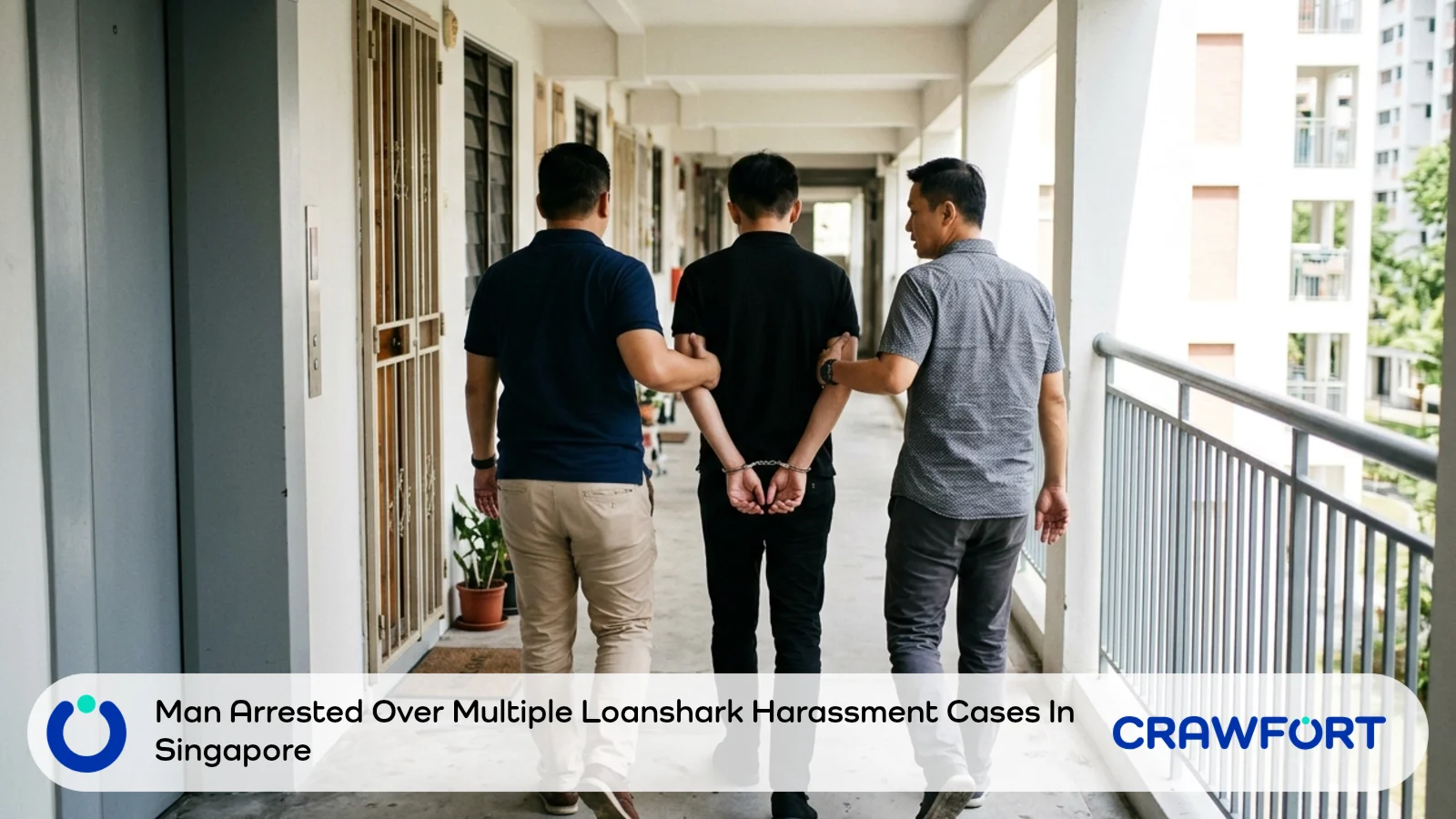
A 25-year-old man has been arrested over his suspected role in several loanshark harassment cases. He is due to be charged in court on 1 September under the Moneylenders Act 2008.
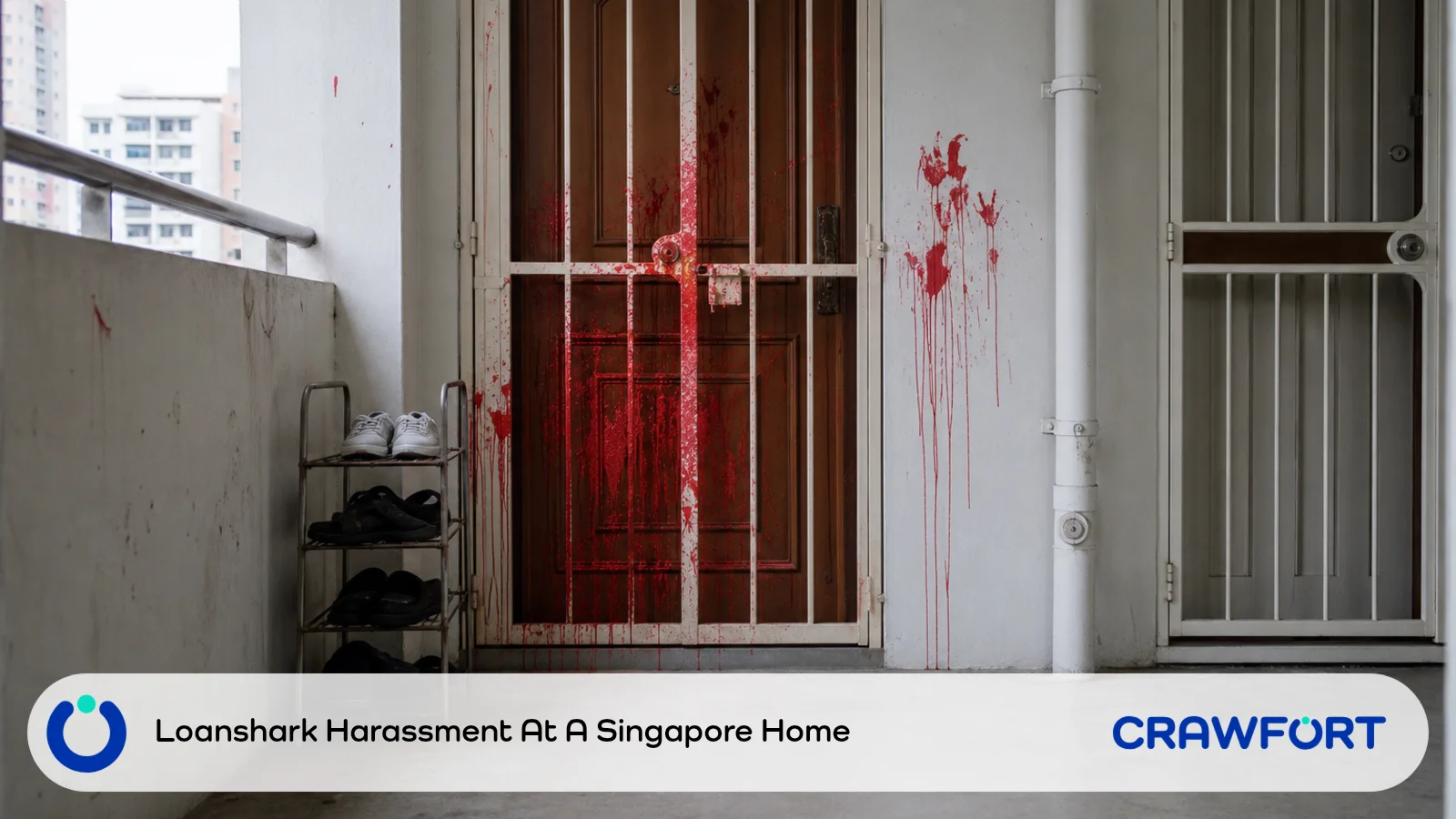
Police were alerted at about 12.05am on 29 August to a flat along Jalan Bukit Merah, where the main gate and door had been splashed with red paint. A nearby wall was scribbled with loanshark graffiti. Officers traced the man using police camera images and arrested him the next day.
The case is more than a crime update. It shows how fast an illegal loan stops being a private matter. One splash of paint at a door affects the borrower’s family, the neighbours and often the whole block.
It also makes a point many people miss. Even a small errand for a loanshark can bring heavy penalties. First-time offenders face a fine of $5,000 to $50,000, up to five years’ jail and up to six strokes of the cane.
He has not been convicted. The suspicion and any charges against him remain allegations until proved in court.
Table of Contents
- What Happened In The Jalan Bukit Merah Case?
- Why This Arrest Matters To Residents
- What Are The Legal Consequences Of Loanshark Harassment?
- What Should You Do If Loanshark Harassment Happens?
- How Can You Avoid Unlicensed Lenders And Their Recruiters?
- What This Means For Households In Singapore
- Frequently Asked Questions
What Happened In The Jalan Bukit Merah Case?
According to the Singapore Police Force report issued on 31 August 2026, police were alerted at about 12.05am on 29 August to a flat along Jalan Bukit Merah. The main gate and door had been splashed with red paint, and a nearby wall was scribbled with loanshark graffiti.
Officers from Central Police Division and Ang Mo Kio Police Division traced the man using police camera images and arrested him on 30 August. Early findings suggest he may have been involved in other similar cases.
Police said he was due to be charged in court on 1 September 2026 under the Moneylenders Act 2008. The statement did not report a conviction or any final court outcome.
Also Read: How alleged assistance to an unlicensed moneylending syndicate can lead to charges
Why This Arrest Matters To Residents
Loanshark harassment is meant to frighten people into paying. Paint splashing, graffiti, threatening notes and locked gates often hit people who never took the loan. Neighbours and property owners get dragged in too.
The police advisory on unlicensed moneylending warns that illegal lenders may use harassment and threats of violence to force repayment. It also tells the public not to work with or help loansharks in any way.
This matters because you do not need to run the operation to get into trouble. A runner who splashes paint, locks a gate, transfers money, hands over a SIM card or lets a syndicate use his bank account may still be assisting an illegal activity.
Also Read: What recent enforcement action reveals about scam and illegal moneylending networks
What Are The Legal Consequences Of Loanshark Harassment?
Police said a first-time offender convicted of loanshark harassment can be fined between S$5,000 and S$50,000, jailed up to five years and given up to six strokes of the cane. The actual sentence depends on what is proved and what the court decides.
Section 28 of the Moneylenders Act covers threatening or abusive behaviour and acts likely to cause alarm or annoyance linked to an unlicensed loan. It applies whether the target is the borrower, a guarantor, a family member or someone else.
One point worth remembering: an arrest and a charge are not proof of guilt. Police statements describe suspected involvement and early findings. Only a court decides if the charge has been proved.
What Should You Do If Loanshark Harassment Happens?
Your first priority is safety, not confrontation. Do not chase a suspected runner or try to negotiate with the people behind the harassment.
Take These Steps:
- Call 999 if there is immediate danger. This includes a fire, threats of violence, an intruder or anyone trapped by a locked gate.
- Keep your distance and preserve the scene. Avoid touching notes, locks, paint containers or other items before the police advise you what to do.
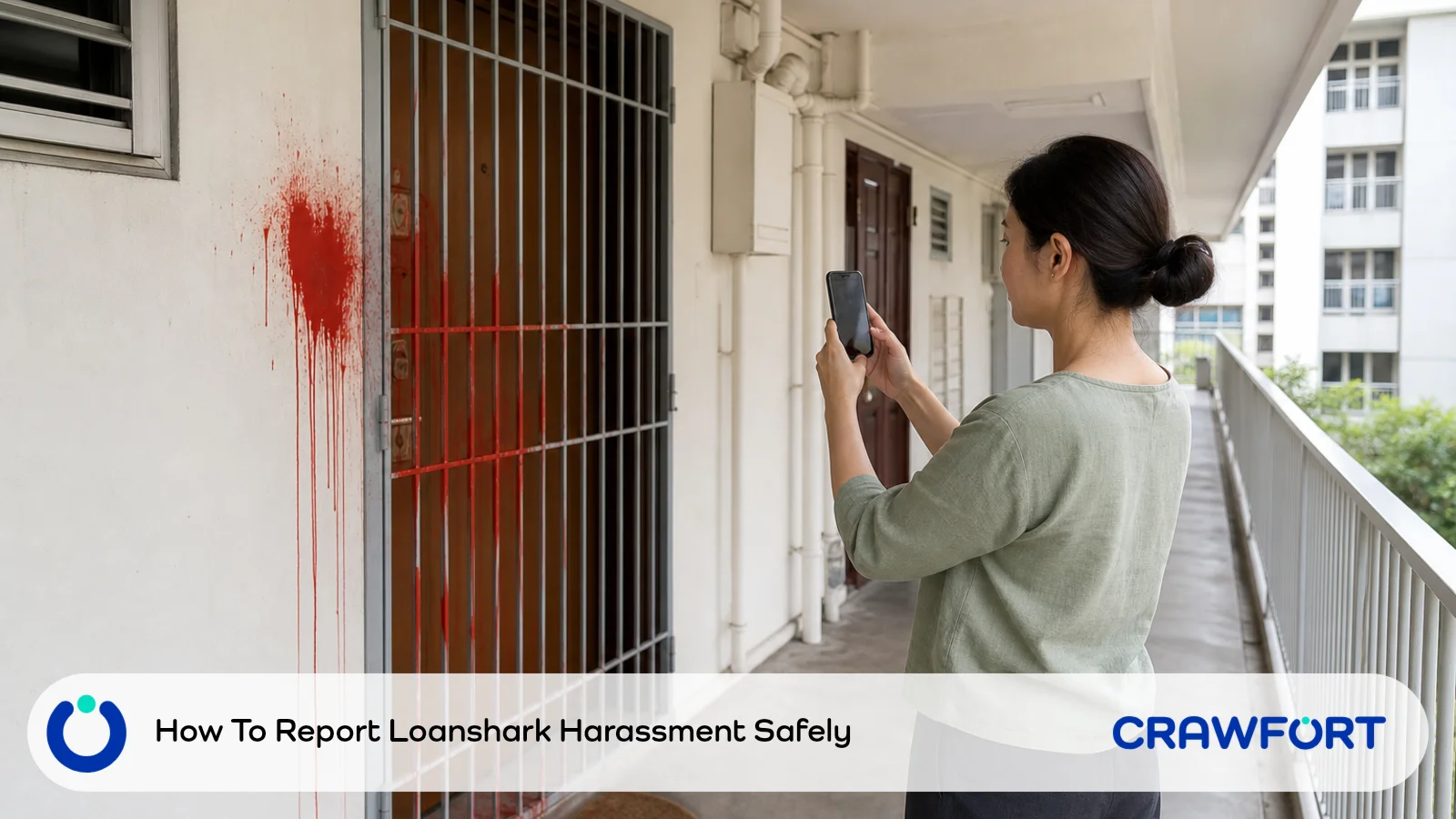
- Record useful evidence safely. Photograph the damage, keep messages and call logs, note the time, and save relevant doorbell or CCTV footage. Do not expose neighbours’ personal details when sharing evidence.
- Make a police report. For non-urgent information, use the Police hotline at 1800-255-0000 or submit information through i-Witness. Give a clear timeline rather than guessing who was responsible.
- Alert affected people. Inform household members, the property owner and the estate management or town council where appropriate. Neighbours may also have footage that can assist investigations.
If the harassment is over someone else’s debt, say so clearly in your report. Do not pay just to make it stop. Paying does not guarantee the threats or demands will end.
Also Read: Practical steps for dealing with loan shark harassment in Singapore
How Can You Avoid Unlicensed Lenders And Their Recruiters?
Unsolicited loan offers are a big warning sign. Licensed moneylenders are not allowed to offer loans by SMS, WhatsApp, phone call or social media. They must also check your identity face to face at their approved office before granting a loan.
Before sharing any personal details, check the lender’s name, business address, landline number and website against the Ministry of Law’s list of licensed moneylenders. Do not rely on a link or a licence photo sent by the person offering the loan.
It also helps to understand how licensed and unlicensed moneylenders differ. A legal borrowing process should not begin with an unsolicited message, a request for an upfront “GST” or processing payment, or a demand for access to your Singpass, bank account or SIM card.
ScamShield’s loan scam guidance advises people not to pay upfront fees and to call the 24-hour ScamShield Helpline at 1799 if they are unsure about an offer. Crawfort’s guide to protecting your Singpass from loan scams provides further checks for suspicious messages and websites.
If borrowing is genuinely necessary, use a bank or a verified licensed moneylender, read the contract carefully and make sure the repayments are manageable. Never accept “easy money” to deliver notes, splash paint, transfer funds or provide accounts and phone lines for someone else.
What This Means For Households In Singapore
The Jalan Bukit Merah case shows that loanshark harassment can move from a private debt problem to a neighbourhood safety issue. Residents should report threats early, retain evidence and avoid direct confrontation.
Anyone offered quick payment to perform a task for an unknown lender should step away; the job may be part of a much larger illegal operation.



