

 Alwin Goh
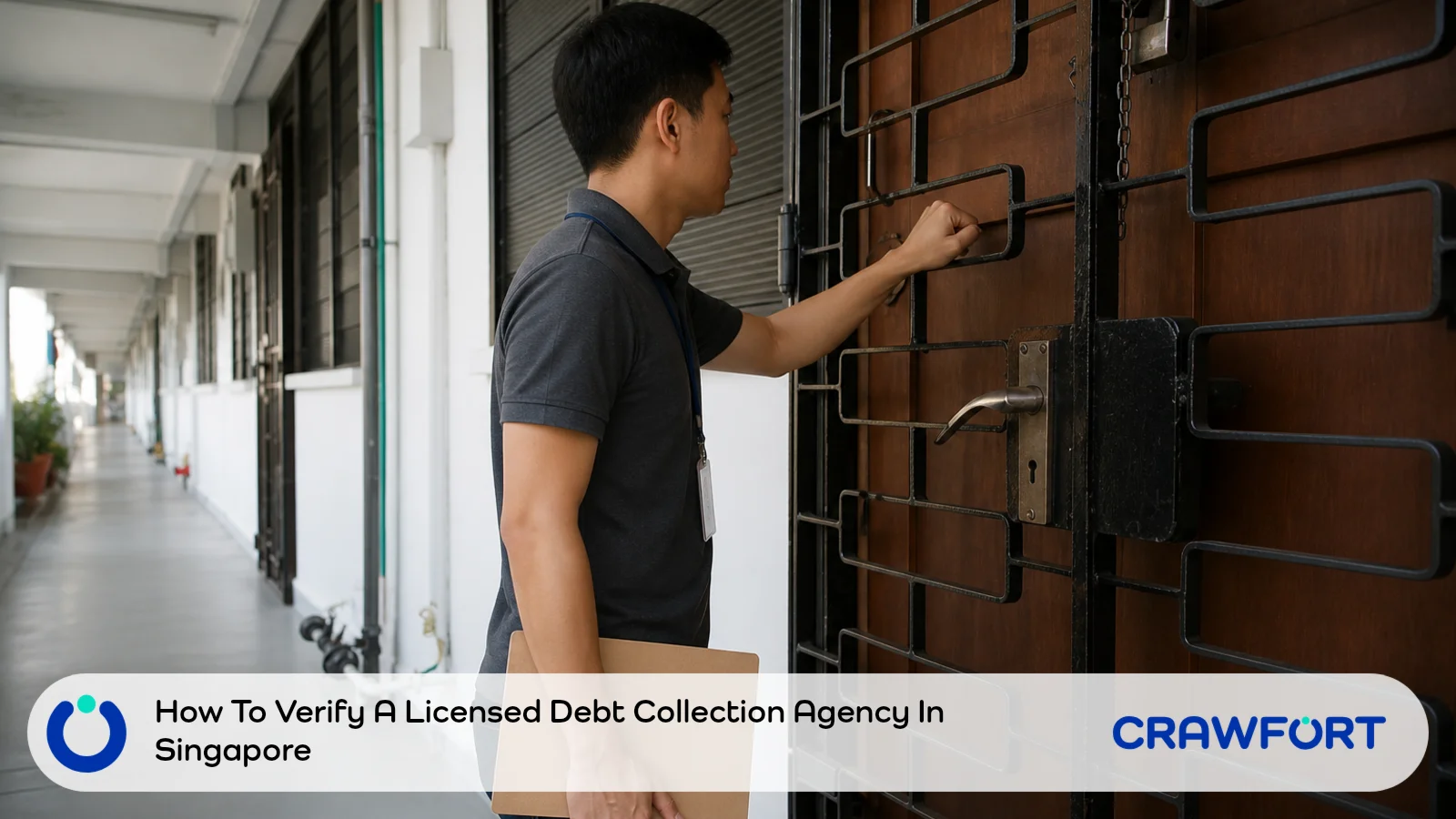
If someone contacts you about an unpaid debt, do not start by arguing over the amount. Start by checking who they are allowed to act for
In Singapore, a debt collection agency and the individual debt collector are not checked in exactly the same way. The agency may need a debt collection business licence, while the person doing the collection work may need Police approval as a debt collector. This article was prepared using official sources checked on 18 August 2026.
The checks below help you separate a legitimate collection approach from an unclear, outdated, or suspicious one.
Before discussing payment, use this quick distinction to decide what to ask for and where to verify it.
| What To Check | What It Helps Confirm | Practical Next Step |
|---|---|---|
| Agency name and UEN | Whether the business identity matches the party contacting you | Search the entity name or UEN on Bizfile |
| Debt collection business licence | Whether the company is authorised where a licence is required | Ask for the licence details and verify them through official channels |
| Collector approval | Whether the individual is approved to carry out collection work for that business | Ask to see the collector approval before sharing personal details |
| Debt details | Whether the agency can explain the creditor, account and amount claimed | Request written proof before making any payment |
Table of Contents
Business Licence And Collector Approval Are Different
The distinction is simple but often missed. The company and the individual are checked separately, and each check answers a different question.
Under the Debt Collection Act 2022, Singapore regulates the operation of debt collection businesses and certain debt collection activities. The Singapore Police Force states that, unless excluded or class licensed, a debt collection company requires a Police licence, and a person working as a debt collector for a licensed company must obtain Police approval.
A collector should therefore not simply say, “My company is licensed,” and expect that to settle the matter. You may ask for the agency’s licence details and the individual’s approval, and you are entitled to check both before any discussion of money begins.
This matters most during a visit, when the pressure to respond feels immediate. If you are unsure how to handle an approach in person, read our guide on whether a debt collector can visit your home or workplace before you decide what to say.
How To Check The Agency
Ask for the agency’s full registered business name, Unique Entity Number (UEN), business address, contact number and debt collection business licence details. A legitimate agency should provide these clearly and in writing.
Confirm the business identity first using ACRA’s Bizfile entity search guidance. This does not prove a debt collection licence by itself, but it shows whether the business name and UEN are real, whether the entity is live, and whether the caller is using a name that matches the registered entity.
For licence matters, the Police Debt Collection Business Licence page explains that a licence may be required when a business collects a debt on behalf of another person, or after acquiring the debt. Applications are made through the GoBusiness listing for debt collection business licences, which is also the sensible place to check any licence reference you are given.
Match These Details Against The Licence Document:
- The registered company name, spelt exactly as it appears on the licence
- The UEN
- The licence validity period
- The activity that the licence covers
- The business address and contact number used to reach you
Do not rely on a screenshot that is cropped, blurred or sent from a personal messaging account. Ask for the details in writing from the agency’s official email domain, then verify them independently rather than through a number the caller has supplied.
If the claim involves a loan, gather your loan agreement, repayment records and messages before you reply. Our guide to loan repayment records in Singapore explains why receipts and proof of closure matter when an amount is disputed.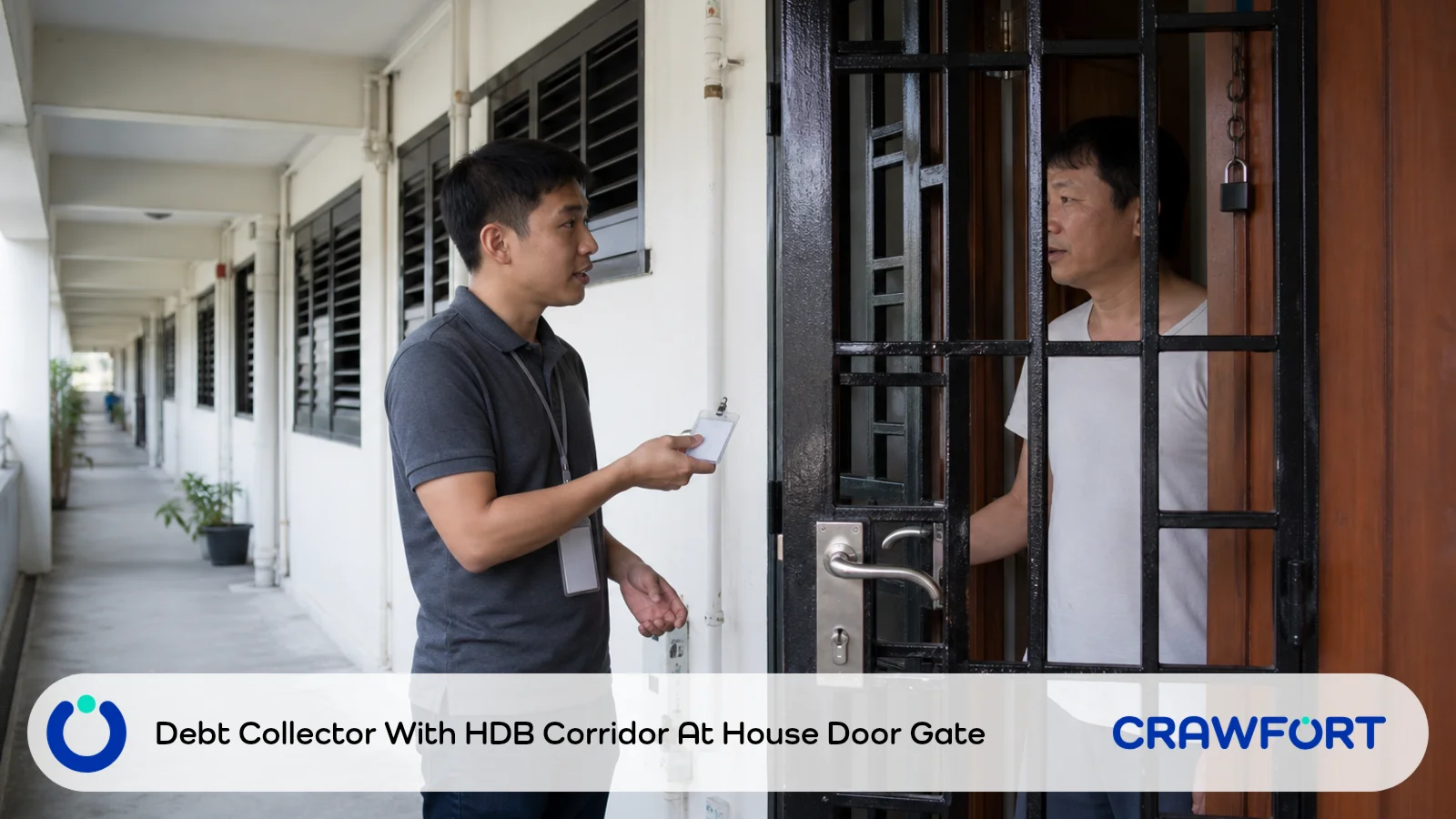
How To Check The Collector
The individual should also be able to identify himself or herself properly. The Approval for Debt Collector listing states that the application is for people who wish to work as debt collectors, and that it must be made jointly with the debt collection business they intend to work for.
That joint requirement works in your favour. An approval is tied to a named employer, so an approval that does not match the agency now contacting you is a reason to stop and check. Police guidance on employing individuals in a debt collection business sets out what a licensee must do for the people it deploys.
Ask the collector for:
- Full name
- Agency name
- Collector approval details
- The creditor or company they say they represent
- A written breakdown of the amount claimed
A lanyard, a polo shirt, a name card and a confident manner are presentation, not verification. None of them shows that the person is approved to collect this debt for this creditor.
If a collector refuses to show approval details, presses you to pay immediately, or tells you that the agency cannot be verified, pause the conversation. Say that you will respond once you have checked the agency and the debt in writing. That reply commits you to nothing.
When A Licence May Not Look The Same
Not every organisation that collects money holds the same type of debt collection business licence.
The Police licensing advisory for debt collection businesses explains that some entities are excluded from the Act, while certain regulated businesses are class licensed. These may include banks, finance companies, licensed credit card or charge card issuers, and licensed or exempt moneylenders collecting debts owed to their own business.
The question is therefore not only, “Do you hold a debt collection licence?” A more useful question is: “What is your legal basis for contacting me, and are you collecting for your own business, for another creditor, or as a licensed debt collection agency?”
Where the debt relates to a licensed moneylender, verify the lender separately. A collector’s claim does not prove the lender’s status, and a licence number quoted over the phone does not prove that the caller works for that lender.
Learn more: 100 FAQs about licensed moneylenders in Singapore cover interest caps, permitted fees, repayment records and borrower rights, so you can measure a claimed figure against the rules that actually apply.
What To Do If Details Do Not Match
If the name, UEN, licence details, collector approval, creditor name or amount does not match, slow the process down. You are not required to settle a disputed or unclear claim on the spot.
Keep A Clear Record:
- Save screenshots of messages, call logs, letters and payment demands.
- Record the date, time, location and names given during any visit.
- Ask for a written debt breakdown before paying anything.
- Do not disclose Singpass, bank login, card or one-time password details.
- Contact the original creditor through a known official channel if you are unsure.
If the collector threatens to seize belongings, remember that an ordinary debt collector is not a court enforcement officer. Our guide on whether debt collectors can seize belongings in Singapore explains why collection contact and formal enforcement are separate processes.
Equally, do not ignore a genuine debt because the first approach was uncomfortable. If the debt appears real, ask for proof, check your records and reply in writing. Silence tends to make matters harder to manage, particularly if the creditor later escalates. You can read more on what may happen if you ignore a debt collector.
If the conduct involves a moneylender rather than a third-party agency, our guide on how to report a licensed moneylender in Singapore explains which authority handles which complaint and how to organise your evidence.
What To Do Next
A clear sequence works better than an argument at the door. Verify the agency, then the collector, then the debt. Only once all three checks make sense should you discuss repayment, a dispute, a settlement or a payment plan.
If a formal letter arrives, do not throw it away. Check the creditor name, reference number, amount, deadline and contact details. Our guide to a letter of demand for personal loan debt explains how to respond without making the situation worse.
If the debt proves valid and the real difficulty is affordability, address that directly. Where the creditor is a licensed moneylender, a documented approach to settling debt with a licensed moneylender is safer than a rushed transfer. If several repayments are already unmanageable, look at how credit counselling and a Debt Management Programme work before taking on anything new.
Do not take a fresh loan simply to stop the pressure unless you have checked the total repayment cost and can afford every instalment.
Need a clear repayment plan instead of another stressful phone call? Crawfort is a licensed money lender in Singapore regulated by the Ministry of Law, with interest, fees and repayment terms set out in writing and explained in person before anything is signed.
You can start an application online and get results in about eight minutes, then complete the required checks at our approved office. Borrow only after confirming that each instalment fits alongside your rent, food, utilities and existing commitments.
Important note: This article is for general information only and does not consider your personal financial or legal situation. If a debt is disputed, large, old or connected to court documents, consider obtaining proper advice before admitting liability, signing any settlement or making payment.



