Alwin Goh

No. A licensed moneylender loan cannot be approved, granted and completed entirely online in Singapore. You may be able to make an online enquiry, submit application details and send supporting documents through a lender’s verified website. A lender may also give you a preliminary or “in-principle” indication based on that information.
Those online steps do not replace the required visit to the moneylender’s approved place of business. Before granting a loan, the moneylender must meet you there in person and verify your identity. The Singapore Police Force also states that licensed moneylenders may only approve or grant loans at their approved business premises.
This distinction matters because scammers often present a remote offer as a completed approval, then demand a payment before the promised funds are released. The regulatory points in this guide have been checked against current Registry of Moneylenders, Police and ScamShield guidance.
For a quick answer, separate what can happen online from what must happen at the registered office. That single distinction stops a preliminary assessment from being mistaken for a granted loan.
| Stage | Can It Happen Online? | What It Means |
|---|---|---|
| Check The Lender | Yes | Use the official Registry to match the business name, address, landline and website. |
| Make An Enquiry | Yes, if the lender offers it | You are asking about possible eligibility or terms. No loan has been granted. |
| Submit Details Or Documents | Possibly | The lender can review the information, but it still has to complete its checks. |
| Receive In-Principle Approval | Possibly | This is a conditional indication, not a contract, guaranteed amount or right to funds. |
| Complete Verification And Final Approval | No | You must attend the approved place of business for the required in-person process. |
| Receive The Loan | Only after the required in-person steps | Funds may be disbursed after the loan is granted. Do not pay money to have them released. |
Table of Contents
What Can Happen Online?
A licensed moneylender’s website can be a legitimate starting point. The Registry allows licensed moneylenders to advertise on their own websites, and current professional guidance encourages clear digital information about loan products and borrowing costs.
Depending on the lender’s process, you may be able to:
- read about available loan products, costs and eligibility criteria;
- submit an enquiry or application form;
- provide contact, employment and income information;
- send supporting documents through a secure channel; and
- receive a preliminary assessment or appointment time.
These are preparation and assessment steps. They do not allow the lender to skip face-to-face verification or grant the loan remotely. Before entering any personal information, find the lender through the official list of licensed moneylenders and use only the website and contact details shown there. A convincing logo or familiar business name is not enough, because scammers can copy both.
If you are preparing an application, check which records can support your declared income. This guide to proving your income for a loan explains the documents commonly accepted from salaried, self-employed and irregular-income applicants.
What Does In-Principle Approval Mean?
“In-principle approval” is commonly used to describe a lender’s conditional indication based on the information available at that point. It is not a special approval status created by the Registry, and it does not mean a loan has already been granted.
A preliminary assessment may assume that your identity, income, employment, existing commitments and documents can all be verified. The lender may still change the proposed amount or terms, request more information, or decline the application after completing its checks. The Registry’s borrower guidance makes clear that the decision to grant a loan, the suitable amount and the contract terms remain the licensed moneylender’s business decision.
What It Does Not Guarantee
An in-principle indication does not guarantee:
- final approval;
- a particular loan amount, interest rate, fee or repayment schedule;
- same-day disbursement;
- acceptance of every document submitted online; or
- that you can avoid visiting the registered business premises.
Do not commit to a purchase or bill payment on the assumption that preliminary approval will become a loan. More importantly, do not transfer a deposit, “GST”, insurance fee or processing fee to secure it. A genuine conditional assessment never requires an upfront payment before funds are released.

What Must Happen Before The Loan Is Granted?
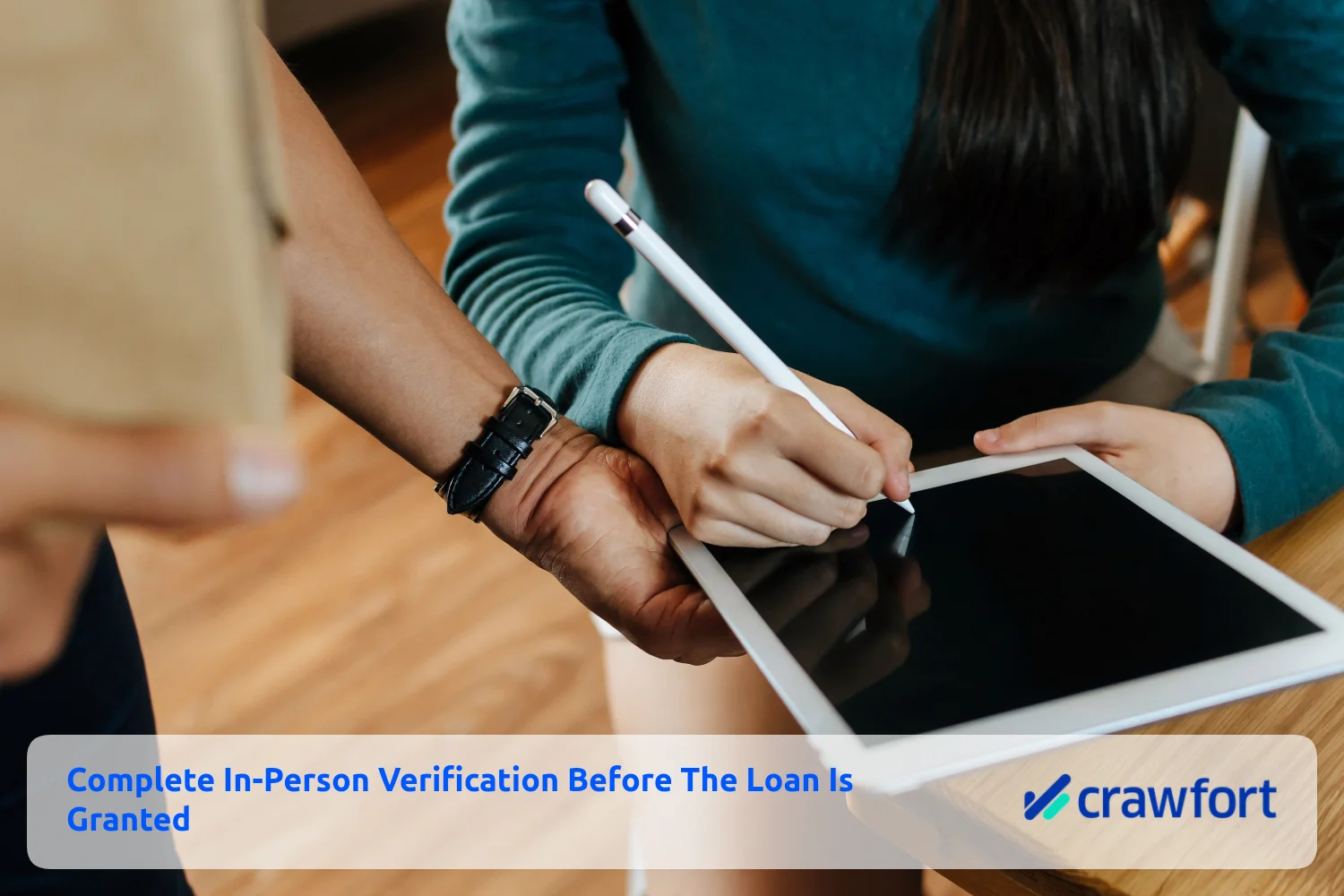
The required office visit is more than a document-collection appointment. It is the point at which the lender must complete the in-person process before approving or granting the loan.
1. Visit The Approved Place Of Business
Go to the exact address shown in the Registry, not a café, hotel lobby, co-working room, car park or residential unit suggested in a message. The Registry states that fully online loan transactions, and transactions at places other than the approved business premises, are disallowed.
2. Complete Identity And Information Checks
The lender must meet you face to face to verify your identity and personal information. It must also exercise due diligence rather than approve a loan by phone, SMS or email without receiving and assessing the application and supporting documents.
The Registry’s Professional Service Handbook says an assessment should consider the borrower’s income frequency, financial commitments, disposable income and creditworthiness. The lender must decide whether the proposed amount and repayment terms are suitable, and an online form cannot settle those questions by itself.
3. Review The Final Terms
A provisional figure can differ from the final offer. Before signing, check the principal, the amount actually disbursed, interest, the administrative fee, repayment dates, instalment amounts, late charges and total repayment. Compare the completed contract with anything stated online or during the preliminary assessment.
The Registry’s borrower guide says the moneylender must explain the loan terms in a language you understand and give you a copy of the loan contract. Never sign a blank or incomplete Note of Contract. A practical loan contract checklist can help you review the final numbers instead of relying on the advertised monthly instalment alone.
4. Sign The Contract And Receive The Loan
The loan is granted only after the required assessment and contract steps are completed. You should receive copies of the completed loan application and the Note of Contract at approval.
Disbursement may then be made using the lender’s available payment method. Receiving money by bank transfer after an in-person visit does not turn the transaction into a fully online loan. The legal problem is the claim that approval, granting and disbursement can all be completed remotely without you ever attending the approved office.
A Safe Application Process
You can use digital steps for convenience without treating the whole transaction as remote. Follow this sequence:
Step 1. Find The Lender Through The Registry
Match the business name, approved address, landline and website. Type the listed website address yourself rather than following a link in an unsolicited message or advertisement.
Step 2. Start The Enquiry Through A Verified Channel
Use the lender’s official website or listed contact details. If you are comparing Crawfort with other options, review the licensed money lender loan information only after confirming the company and website details against the Registry.
Step 3. Protect Your Login Credentials
Provide only the information reasonably needed for the application, and use the lender’s secure channel. A licensed moneylender should never ask for your Singpass password, banking password or one-time password. If a process uses Singpass or MyInfo, authenticate through the official interface rather than disclose credentials to a staff member.
Step 4. Treat Any Preliminary Result As Conditional
Ask what still needs to be verified, which documents to bring, where the appointment will take place and whether the quoted terms may change. Keep copies of all messages and submitted documents.
Step 5. Attend The Listed Office And Read The Completed Contract
Check the final loan against your budget before signing. If the instalments would strain essential expenses, or you are borrowing to meet existing repayments, pause and review ways to avoid overborrowing when cash is urgent.
Step 6. Receive Funds Without Paying To Release Them
The Singapore Police Force says licensed moneylenders will not ask an applicant to make a payment before disbursement or to secure disbursement. A permitted administrative fee of up to 10% of the principal may be deducted when the loan is granted, and that is very different from transferring money first to obtain the loan.
Scam Warning Signs To Watch For
A claimed licence number does not make a remote offer genuine. Stop and verify independently if you encounter any of these signs:
- An unsolicited loan offer: licensed moneylenders are not allowed to solicit loans through text messages, phone calls or social media.
- A remote-only promise: the person says approval and disbursement can be completed without an in-person visit to the approved office.
- An upfront payment request: you are told to pay GST, an administrative or processing fee, insurance, account clearance, a deposit or another charge before receiving funds.
- Guaranteed approval: the offer promises a fixed amount without proper assessment, or says documents and checks are unnecessary.
- Mismatched details: the website, phone number or meeting address does not match the Registry entry, even if the person uses a real lender’s name.
- Requests for secret credentials: someone asks for your Singpass password, bank login, card details or one-time password.
- Pressure or unusual instructions: you are rushed, asked to buy a phone or SIM card, or told to transfer the borrowed money to another person or a supposed “safe account”.
ScamShield’s loan-scam guidance advises against paying any upfront fee as a condition for receiving a loan. The Police advisory on loan scams also warns that scammers may impersonate a legitimate moneylender or claim to be its partner.
If you think you have encountered a scam, stop all contact and do not send more money or documents. Use the contact information on the official Registry entry to check whether the real company is involved. If money or account credentials have already been transferred, contact your bank immediately and make a Police report. You can also call the 24-hour ScamShield Helpline at 1799.
Before You Apply
The dividing line is simple: digital tools can support an enquiry and a preliminary review, but they cannot replace the regulated in-person process. Treat in-principle approval as conditional, visit only the listed business premises, compare the final contract with what was discussed, and never pay money to release a promised loan.
Borrow only after checking the total repayment and confirming that every instalment is manageable alongside rent, food, utilities and existing debts. If the figures do not work, a quick approval does not make the loan suitable.
Important note: This article is for general information only and does not consider your personal financial situation. Before taking a loan, review the loan contract carefully and make sure repayments are manageable.