Alwin Goh
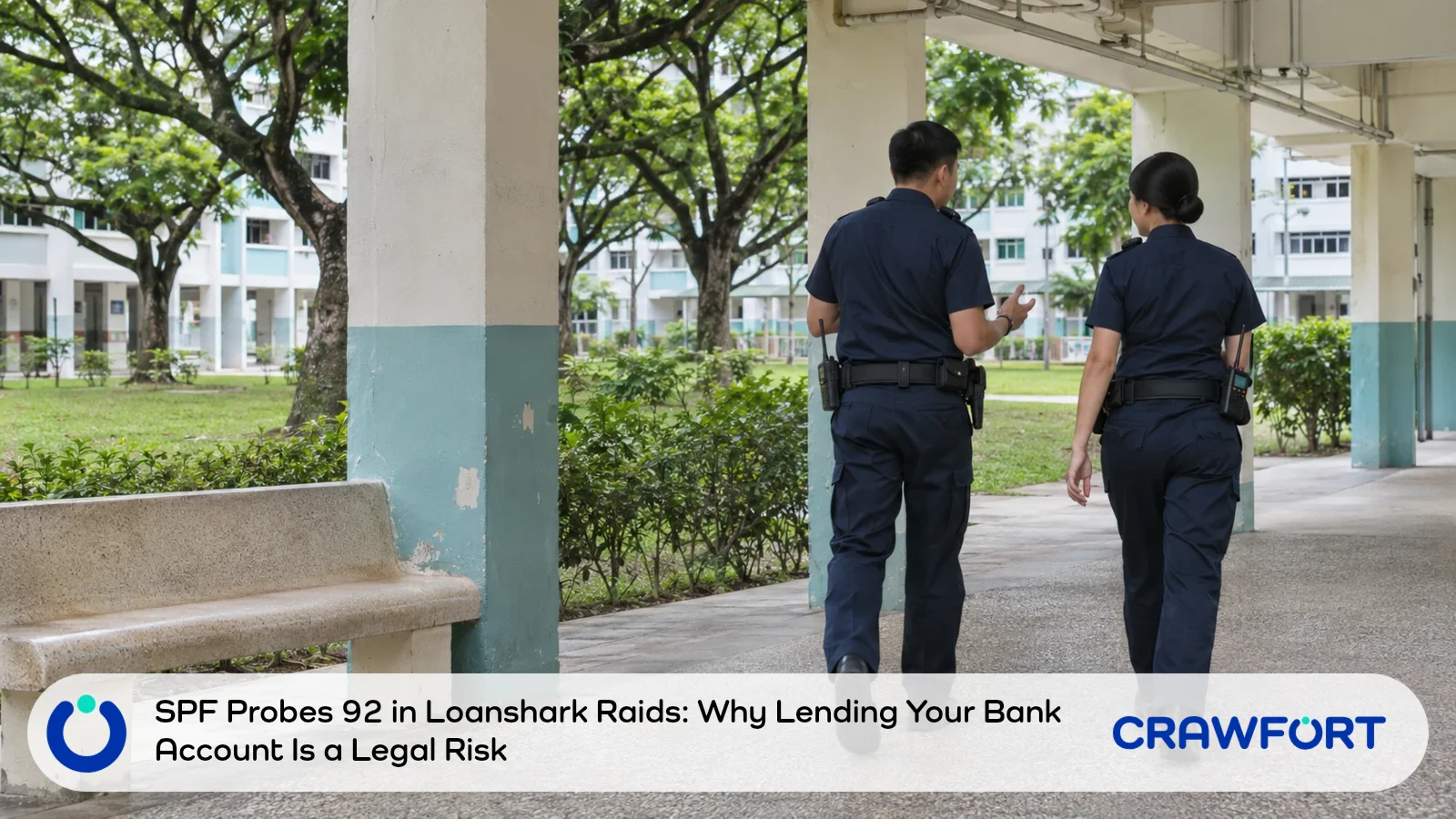
The Singapore Police Force (SPF) is investigating 92 people, aged 18 to 88, for their involvement in unlicensed moneylending. Police announced the investigations on the evening of 5 November 2026, after an islandwide operation that ran from 26 to 30 October.
Only one of the 92 is suspected of running a lending business. Based on the police’s preliminary findings, 81 of the others allegedly handed over bank accounts and banking access, or carried out ATM transfers, for unlicensed moneylenders.
Investigations against all 92 people are ongoing. The police release doesn’t say that anyone has been charged, and no conviction has been reported. Police also haven’t released names, the amounts of money involved or which role each person is suspected of playing.
Each group allegedly did a different job for the lenders, and the law treats those jobs differently. Here’s the main exposure for each one.
| Suspected Role | People | What Police Say They Did | Main Legal Exposure |
|---|---|---|---|
| Account Providers | 43 | Opened bank accounts and gave their ATM cards, PINs and/or internet banking tokens to unlicensed moneylenders | Presumed to have assisted the business; possible one-year bar from ATM and internet banking |
| ATM Transfer Runners | 38 | Carried out ATM transfers to help unlicensed moneylending | Assisting unlicensed moneylending |
| Alleged Harassers | 9 | Harassed debtors at their homes | Harassment on behalf of an unlicensed moneylender, with a longer maximum jail term for first-time offenders |
| Phone Line Provider | 1 | Provided his mobile numbers to unlicensed moneylenders | Presumed to have assisted if the lines were used for the business |
| Suspected Lender | 1 | Operated as an unlicensed moneylender | Carrying on an unlicensed moneylending business |
| Total | 92 | All under investigation; no charges announced | Investigations ongoing |
Table of Contents
- What Police Found Over Five Days
- What Is Each Group Suspected Of Doing?
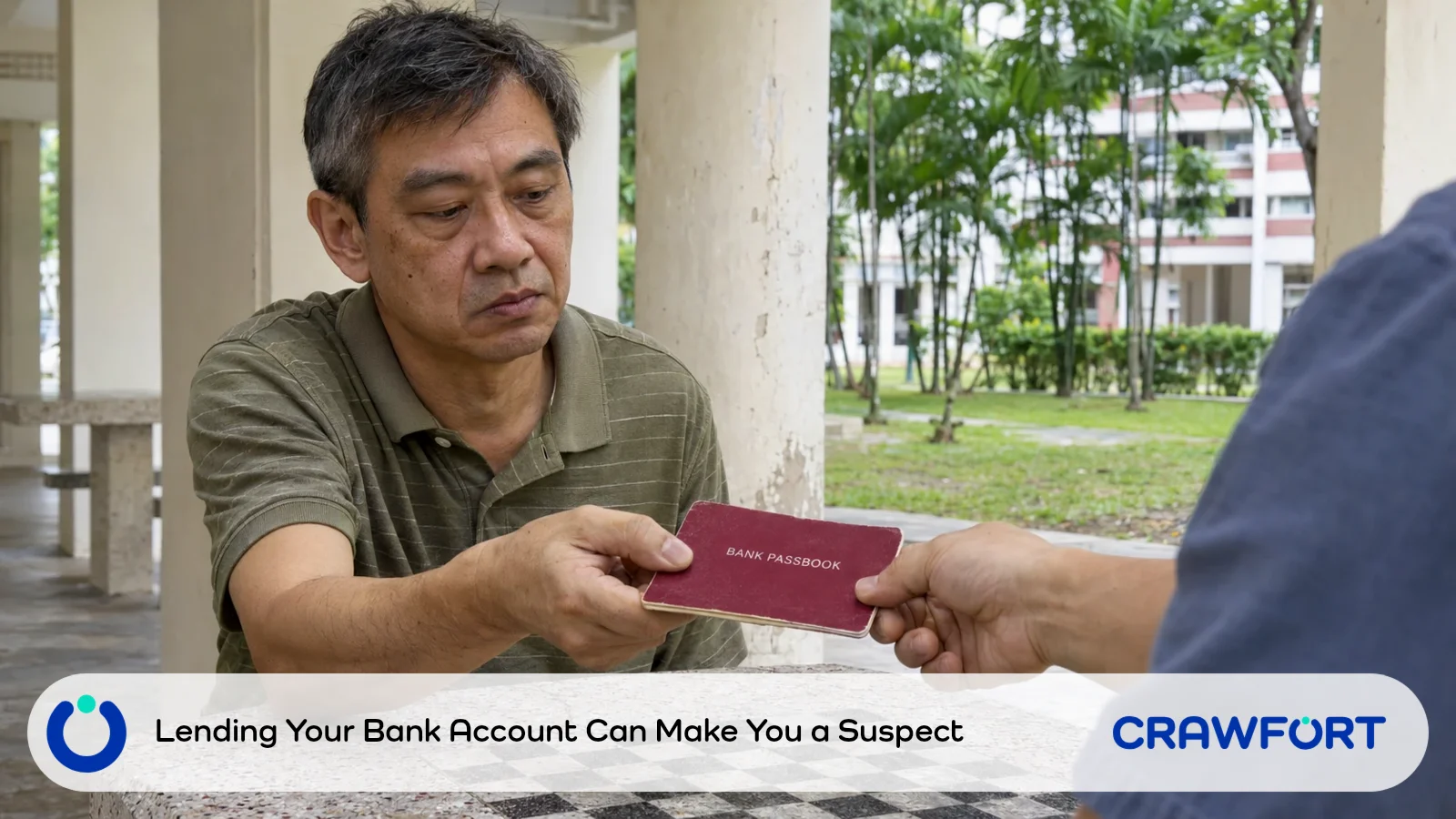
- Why Lending Your Bank Account Can Make You A Suspect
- The Risks Don’t Stop At Court
- Red Flags That Match These Roles
- Already Handed Over Your Card, Account Or Line?
- If Money Problems Are Pushing You Towards A Loanshark
- What Happens Next
- Frequently Asked Questions
What Police Found Over Five Days
Officers from the Criminal Investigation Department and the seven Police Land Divisions carried out raids across Singapore during the operation, according to the SPF’s release on the 92 people under investigation.
The release calls these preliminary findings. The roles in the table are what investigators believe each person did, and none of it has been tested in court.
The age range is wide. The youngest person is 18 and the oldest is 88, but the release doesn’t say which role the 88-year-old is suspected of playing.
Also Read: What a 550-person crackdown in July showed about sharing your bank account
What Is Each Group Suspected Of Doing?
A loanshark operation needs more than someone with cash to lend. It also needs ways to reach borrowers, move money and pressure people to repay, and the 92 cases cover each of those jobs.
43 Account Providers
Police said 43 people opened bank accounts and gave their ATM cards, personal identification numbers (PINs) and/or internet banking tokens to unlicensed moneylenders. With that access, a lender can pay out loans and collect repayments through accounts that aren’t in its own name.
This is the largest group. The account holder may never meet a borrower, yet every transaction runs through an account in their name.
38 ATM Transfer Runners
The SPF described 38 people as runners who helped the lending business by carrying out ATM transfers. Runners do the banking, so the people behind the business don’t have to make the transfers themselves.
The Moneylenders Act 2008 counts this as assisting. You assist if you carry out a banking transaction for someone you know, or have reasonable grounds to believe, is lending without a licence, when the money is a loan or a repayment.
9 Alleged Harassers
Nine people allegedly harassed debtors at their homes. The SPF warned that unlicensed moneylenders use persistent and dangerous harassment against borrowers and their families, such as setting fires, splashing paint on homes and locking gates with chains or bicycle locks to trap the people inside.
Harassing someone on behalf of an unlicensed moneylender is a separate offence. First-time offenders face a longer maximum jail term for it than for assisting.
Read More: How three arrests for loanshark harassment unfolded and what residents can do
One Phone Line Provider And One Suspected Lender
One person allegedly provided his mobile numbers to unlicensed moneylenders. Phone lines let a syndicate advertise loans, contact borrowers and chase repayments without using numbers registered to the people running it.
The last person is suspected of operating as an unlicensed moneylender.
Cases like these can end up in court. In August, police said six men would be charged under section 19 of the Act for allegedly assisting a separate unlicensed moneylending syndicate.
Why Lending Your Bank Account Can Make You A Suspect
You don’t have to lend money yourself to break the Moneylenders Act 2008. Section 19 makes it an offence to assist someone who lends without a licence.
The police release names the items that matter. When a phone line, bank account, ATM card or internet banking token belonging to someone is used to help an unlicensed moneylender, that person is presumed to have assisted the business.
Section 19(7) of the Moneylenders Act sets out the rule. If the court is satisfied that your bank account, your ATM card, or a phone line or other telecommunication service in your name or bought by you was used for the business, you’re presumed to have assisted “until the contrary is proved”.
Put simply, once the prosecution shows your account or line was used, it’s up to you to prove you weren’t helping the lender.
Other Acts That Count As Assisting
Section 19(5) lists other ways a person can assist an unlicensed moneylender. These apply when you know, or have reasonable grounds to believe, that the person is lending without a licence:
- Collecting or demanding loan repayments for the lender
- Handling the lender’s money, or carrying out banking transactions for its loans or repayments
- Lending or providing money, or lending, selling or providing a prepaid SIM card or other property, for use in the business
- Keeping the business’s records, or promoting or advertising it
- Referring a potential borrower to the lender, or passing on their details
Penalties If Convicted
The SPF said first-time offenders found guilty of carrying on or assisting an unlicensed moneylending business face up to four years’ jail, a fine of S$30,000 to S$300,000 and up to six strokes of the cane. Under section 19, a repeat offender faces up to seven years’ jail, the same fine range and up to 12 strokes.
Harassment carries its own penalty. For first-time offenders who harass people on behalf of an unlicensed moneylender, the SPF said it’s up to five years’ jail, a fine of S$5,000 to S$50,000 and three to six strokes of the cane.
The Risks Don’t Stop At Court
A court case isn’t the only risk. The SPF said anyone who allows their bank accounts to be used by unlicensed moneylending syndicates for illicit transactions may be prosecuted and barred from using ATM and internet banking facilities for a year. For 12 months, withdrawing cash or paying bills online could get much harder.
Foreigners face an extra risk. Police said foreigners found to have borrowed from unlicensed moneylenders, or convicted of aiding them, will have their student or work passes cancelled and will be deported once they complete their sentence.
Know More: How police are dealing with money mules in scam investigations
Red Flags That Match These Roles
Each role in this operation can start with one simple request. Stop and walk away if someone:
- Asks for your ATM card, PIN or internet banking token as a condition for a loan
- Offers you money for receiving, withdrawing or transferring funds through your account
- Asks you to open a new bank account or register a mobile line for someone else to use
- Wants you to visit a borrower’s home to “remind” them to pay
- Asks for your Singpass login details
Handing over your ATM card, PIN or banking token isn’t part of a normal loan application. If a lender asks for any of them, you’re not dealing with a legitimate business.
Learn More: Why lending your Singpass to a stranger can lead to jail
Already Handed Over Your Card, Account Or Line?
Acting fast limits how much more activity goes through your name. These steps can help:
- Stop helping straight away. Don’t make any more transfers or withdrawals, and don’t open accounts or phone lines for anyone else.
- Call your bank. Use the number on the back of your card or on the bank’s official website, then ask it to block your card, deactivate your token and digital banking access, and change your PIN.
- Keep your records. Save messages, call logs, phone numbers, names and transaction slips.
- Report what you know. The SPF asks anyone who suspects or knows of unlicensed moneylending to call the Police Hotline at 1800-255-0000 or submit information through the police’s i-Witness online form. Police say all information will be kept confidential.
- Think about legal advice. This matters most if police contact you about your account.
If Money Problems Are Pushing You Towards A Loanshark
Need to borrow? Check the lender against the Ministry of Law’s list of licensed moneylenders before you share any personal details. Our comparison of licensed and unlicensed moneylenders shows the main differences to look for.
When repayments are already out of hand, credit counselling can help you work out a plan before the debt grows. And if you’re being harassed over a loanshark debt, these steps for dealing with loanshark harassment explain what to do.
What Happens Next
Investigations against the 92 people are still ongoing, and police haven’t said when they’ll decide whether to charge anyone. Being investigated isn’t the same as being found guilty.
The practical lesson doesn’t depend on how these cases end. If anyone asks to borrow your bank account, ATM card, banking token or phone line, especially in exchange for a loan or a commission, say no and report it.