Alwin Goh
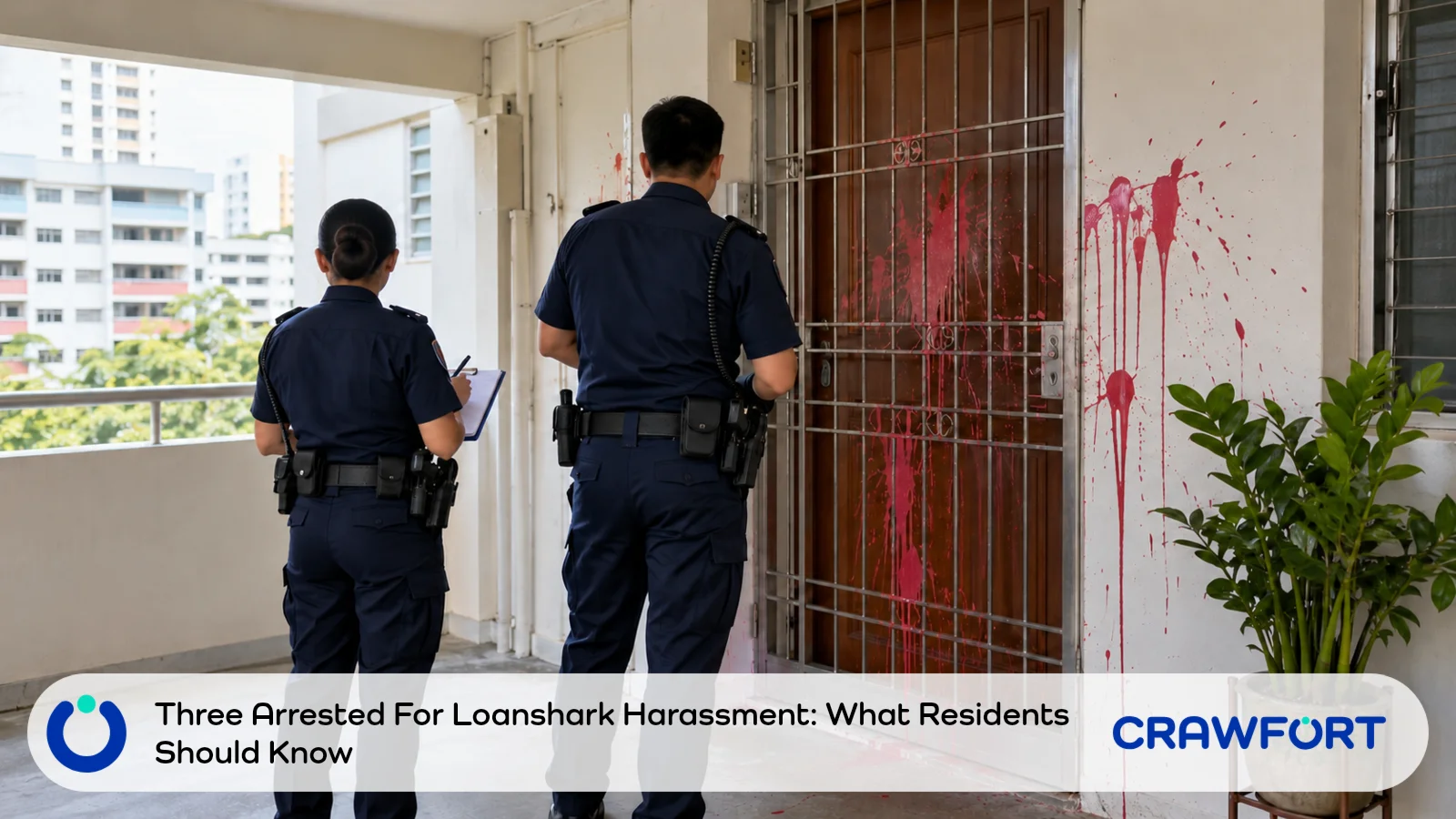
Paint across the front door, graffiti on the wall and, in one case, a debtor’s note left on the gate. Between 9 and 16 October, three homes in Bukit Panjang and Jurong West were targeted by loanshark harassers, and police have now arrested two men and a teenager over the cases.
The suspects, aged 18, 31 and 43, were all picked up on 16 October. A Singapore Police Force news release says they were due in court the next day to be charged under the Moneylenders Act 2008. Police also believe each of them was involved in similar cases elsewhere on the island.
One of the arrests came down to a sharp-eyed resident. Just after midnight on 16 October, an occupant of a Segar Road flat noticed a man carrying a bag of paint cans, stopped him and held him until officers arrived.
Table of Contents
Three Doors In Eight Days
On the night of 9 October, someone splashed red and yellow paint on a door at Senja Road. They also scribbled loanshark graffiti on the wall. Police cameras helped officers find the 18-year-old.
Then on 13 October, a flat at Jurong West Street 93 got green and blue paint on its door. A debtor’s note was left on the gate too. Cameras again led police to a suspect, this time a 43-year-old man.
The Segar Road case went another way. Around 12.30am on 16 October, a resident spotted a man with a bag full of paint cans and thought something was off. The resident held him until police came, and on him they found a marker, the paint cans and a debtor’s note. He’s 31.
Fines, Jail And The Cane
The stakes are high. A first-timer convicted of this faces a fine somewhere between S$5,000 and S$50,000, possible jail of up to five years, and as many as six strokes of the cane (figures as of October 2026).
But nobody has been convicted yet. Being charged is only the start.
Someone At Your Door Right Now?
Dial 999 and tell the operator your block, your unit and what’s going on outside. You don’t need photos first, and you don’t need to know whose debt it is.
Please don’t copy the Segar Road resident and try to grab someone. It worked out that time. It might not for you.
Not urgent? There’s also a Police hotline, 1800-255-0000, listed on the SPF page on unlicensed moneylending. Some people find i-Witness online easier, or you can walk into your nearest Neighbourhood Police Centre.
Save What You Can
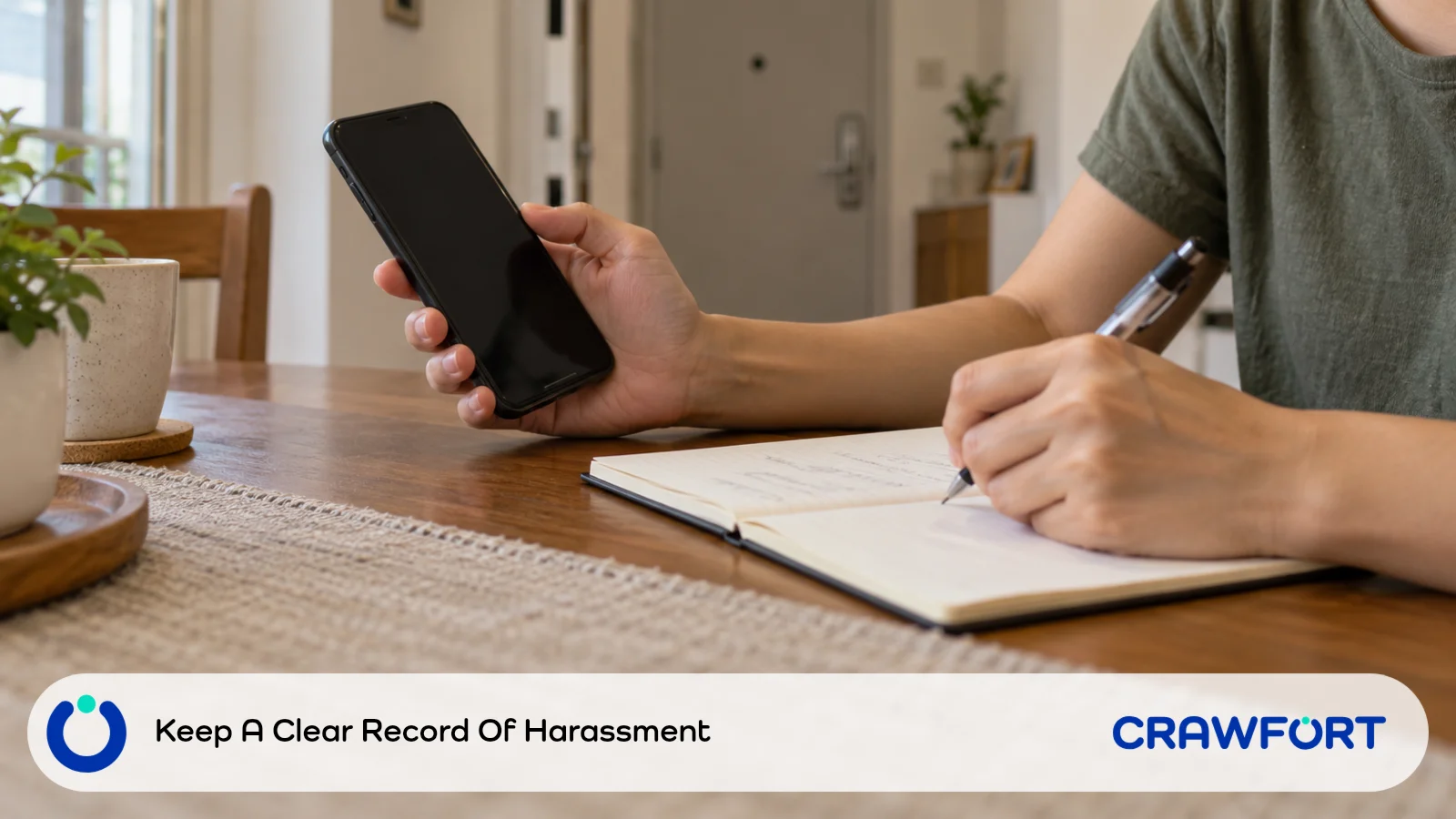
Keep everything, even the stuff that seems minor. A screenshot of the whole chat beats a crop of the nastiest line, because it shows the sender’s number and when the message came in.
If it’s safe, snap a few photos of the paint or the note before anyone cleans up. Your town council or building management may have CCTV, so mention that to the police.
Hold off on blocking the number until the messages are saved. After that, a rough list in your phone’s notes app does the job, with the date, what happened and which photo goes with it.
Also read: our guide on recording and reporting debt collector harassment
Not Your Debt?
Plenty of people get notes meant for someone else, whether it’s a relative, the flat’s previous tenant or a name they’ve never heard of.
Just tell the police whose name is on it and whether you know them. Keep the note. Don’t send your NRIC or family details to whoever is behind it, and don’t pay them to go away.
If you’ve got kids at home, tell them one thing: if they see a note or get a weird call, come tell you.
One more point. Police warn people not to help loansharks at all, even for a “quick job”. The SPF page says that if your bank account, SIM card, ATM card or banking token is used for unlicensed moneylending, the law presumes you helped. So never lend those out.
Real Lenders Don’t Text You

Got a loan offer on WhatsApp? That alone is a red flag. Licensed moneylenders aren’t allowed to offer loans by SMS, calls or social media.
They also have to meet you face to face at their office before giving you a loan. A loan done fully online isn’t allowed. And if anyone asks you to pay a “processing fee” first, it’s a scam. You can call 1799 to check.
To see if a lender is real, look it up on the Ministry of Law’s list of licensed moneylenders. Match the address and the website.
Licensed lenders can still chase you for money you really owe. They can ask you to pay or take you to court. What they can’t do is threaten you or damage your home, says the Registry’s borrowing FAQ. If one does, report it to the police and tell the Registry too.
Money Tight? Talk To Someone
Borrowing more to cover old loans usually backfires. Write down what you owe and when each payment is due before doing anything else.
If your debts are with licensed moneylenders, Credit Counselling Singapore runs a Moneylender Debt Management Programme. You’ll need to show you can repay, and your lenders have to agree. CCS says the plan should clear those debts within two years. It won’t help with loansharks, though.
Read more: When it’s time to seek counselling for credit card debt
What Happens Now
The three were scheduled to be charged in court on 17 October. As of 20 October 2026, police haven’t announced any further update, so how each case ends is still unknown.
Police have made their stance clear, though. In the release, they said they have zero tolerance for loanshark harassment, and anyone who vandalises property or disturbs public peace will be dealt with severely.
For the rest of us, the Segar Road case shows how much a watchful neighbour can help. If you see someone hanging around a flat with paint cans or a marker, don’t step in yourself. Note what you saw and call the police.