Alwin Goh
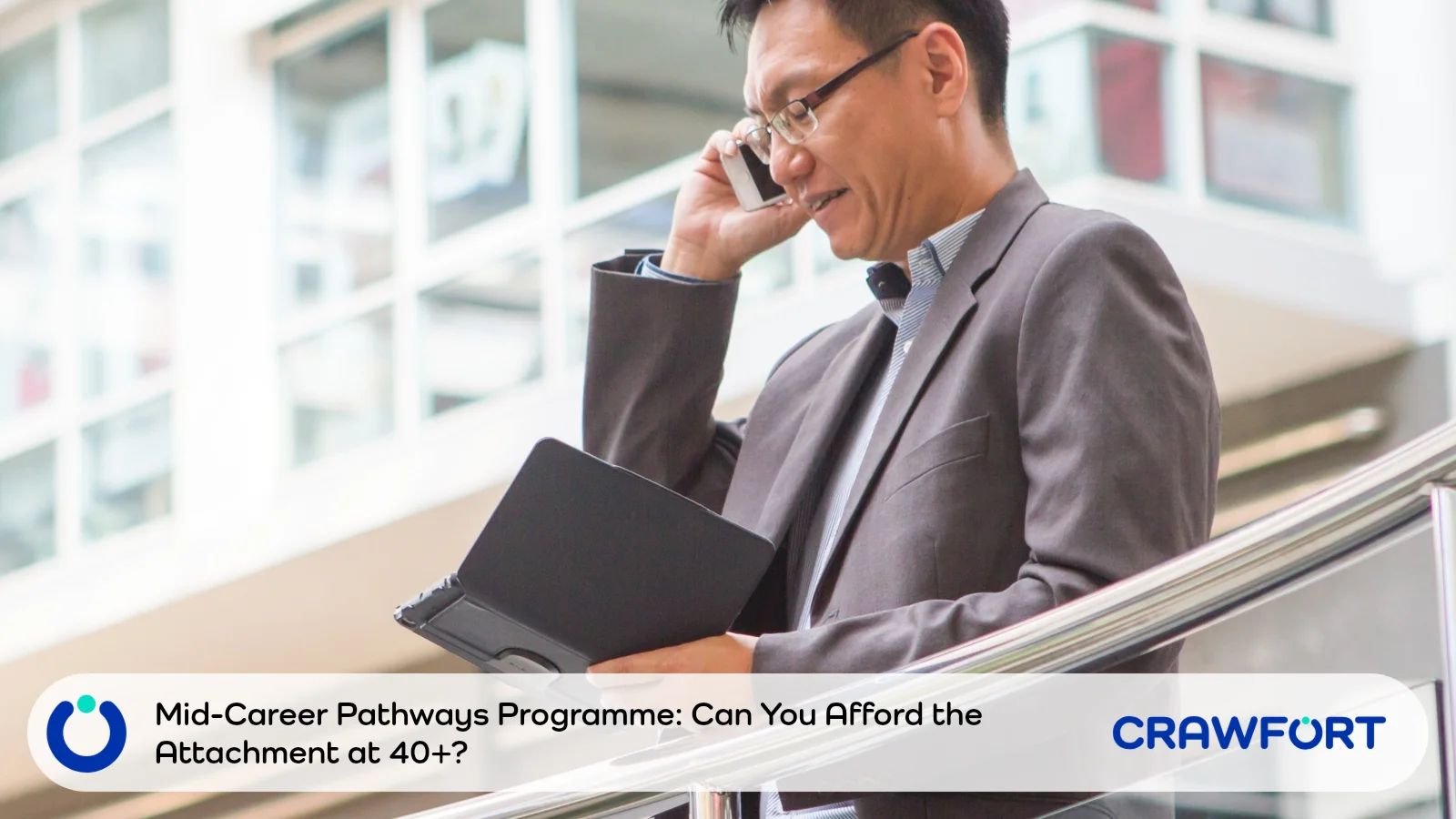
The Mid-Career Pathways Programme pays trainees a monthly allowance of S$1,800 to S$3,800, according to the programme page of the Skills and Workforce Development Agency (SWDA), which was last updated on 16 October 2026. Singapore citizens and permanent residents aged 40 and above join a host organisation on a full-time attachment of four to six months. The Government funds 70% of the allowance.
Trainees don’t get CPF contributions, though. SWDA’s FAQ for mature mid-career individuals, updated as of May 2026, says there’s no employer-employee relationship during the attachment, and host organisations won’t make any CPF contributions. Hosts also aren’t obliged to offer employee benefits such as annual or medical leave.
According to the FAQ, SWDA runs the programme with the Singapore Business Federation (SBF) as its programme partner. The agency itself is new. On 24 June 2026, the Ministry of Manpower (MOM) said SWDA would be set up on 1 July 2026 through the merger of SkillsFuture Singapore (SSG) and Workforce Singapore (WSG). Older guides and listings may still name WSG as the agency in charge.
Some figures aren’t public. Neither the programme page nor the FAQ gives current conversion rates or the number of open attachments, so you can’t tell from them how likely a job offer is at the end.
We’ll start with what SWDA pays and what it leaves out, since every other number depends on that. Then we explain what changes when you’re a trainee rather than an employee. After that, we work out your monthly cash and check whether your CPF can still pay your housing loan, since that’s where gaps tend to show up first. The last sections cover your pay after conversion, the questions to ask the host and what to do if the sums don’t work yet. We checked the programme rules on 12 November 2026.
Table of Contents
- What SWDA Says The Programme Pays
- You’re A Trainee, Not An Employee. What Changes?
- How Much Cash Will You Have Each Month?
- Will Your CPF Still Cover Your Housing Loan?
- Your Take-Home Pay Can Drop After Conversion
- Questions To Ask The Host Before You Say Yes
- What If The Numbers Don’t Work Yet?
- A Practical Way To Decide
- Frequently Asked Questions
What SWDA Says The Programme Pays
Seen an attachment you like on MyCareersFuture? SWDA says the allowance depends on the scope of the attachment the host proposes, so two attachments in the same industry can pay quite different amounts. The host pays it to you every month.
That makes S$3,800 a ceiling, not a typical figure. Budget with the allowance written in the listing you apply for.
Here’s what the programme covers and what it leaves to you.
| Item | What SWDA Says | What It Means For Your Budget |
|---|---|---|
| Attachment Length | Four to six months, full-time | Plan for six months of changed income, even for a shorter attachment |
| Monthly Allowance | S$1,800 to S$3,800, depending on the attachment’s scope | Budget with the figure in the listing you apply for, not the S$3,800 maximum |
| CPF | The host makes no CPF contributions | No new money goes in to pay your housing instalments, MediSave premiums or retirement savings |
| Leave And Benefits | Not required; paid leave may be offered as goodwill, but no monetary benefits | You may get no paid sick days, and you can’t cash out leave you don’t use |
| After The Attachment | Host must hire you for at least 12 months if your performance is satisfactory | A job offer depends on your assessment, so plan for both outcomes |
| Pay After Conversion | At least the same as the attachment allowance | Your take-home pay can fall once CPF is deducted from your salary |
You’re A Trainee, Not An Employee. What Changes?
Used to payslips that come with CPF and paid leave? As a trainee, you lose some of these, though the programme still gives you a few protections.
What You Don’t Get During The Attachment
- CPF contributions. The host won’t make any CPF contributions while you’re on attachment.
- Guaranteed leave. The host isn’t obliged to give you annual or medical leave. It may offer paid leave as goodwill, but SWDA doesn’t allow unused leave to be cashed out.
- Extra monetary benefits. The host isn’t allowed to pay monetary benefits on top of the allowance.
SWDA’s FAQ doesn’t mention deductions from the allowance. Since you aren’t an employee, there’s no employee CPF share to take out, so the full allowance should reach your bank account. Confirm this with the host before you start.
What The Programme Still Gives You
- Workplace injury cover. The host must provide insurance for workplace accidents and injuries during the attachment.
- Make-up pay for NSmen. If you’re called up for in-camp training, you can claim make-up pay from MINDEF for the allowance you lose.
Either side can also end the attachment early, with the notice set out in the attachment agreement. For budgeting, don’t count on six full months of allowance or on a job at the end.
How Much Cash Will You Have Each Month?
Working now and comparing offers? Put your take-home pay after CPF next to the allowance, not your gross salary. Using the gross figure makes the drop look bigger than it is.
These numbers are only an example. Say you’re 45, a Singapore citizen, and earn S$5,000 a month before CPF. You’re offered an attachment paying S$3,000 a month. The CPF figures use CPF Board’s contribution rates from 1 January 2026, under which employees aged 55 and below earning more than S$750 a month contribute 20% of their wages and employers add 17%.
| Monthly Figure | Current Job | During The Attachment |
|---|---|---|
| Gross Salary Or Allowance | S$5,000 | S$3,000 |
| Your CPF Contribution (20%) | S$1,000 | S$0 |
| Cash Reaching Your Bank | S$4,000 | S$3,000 |
| Employer CPF Contribution (17%) | S$850 | S$0 |
| Total Going Into CPF | S$1,850 | S$0 |
Your cash falls by S$1,000 a month, not S$2,000. Over a six-month attachment, that’s S$6,000 less cash and S$11,100 that doesn’t go into CPF. If you’re above 55, your CPF rates are lower, so redo the sums with your own age band.
Out of work right now? Then the allowance is all new cash. Nothing goes into your CPF, though, until you’re converted to a full-time role.
Also Read: How to make your savings last longer after a retrenchment
List The Bills That Stay The Same
Your fixed costs won’t shrink because your income has. Some may even go up, say if the new office means a longer MRT ride or more meals out.
Add Up These Monthly Commitments:
- Housing instalments, both the part you pay in cash and any part your CPF pays now
- Loan and credit card repayments
- Insurance premiums paid in cash
- Utilities, phone, internet and conservancy charges
- Transport, meals and work clothes for the new workplace
- School fees, childcare and allowances for your parents
- Groceries and other household spending
Take that total away from the allowance plus any other household income, such as your spouse’s pay. What’s left is your monthly surplus or gap.
Cover The Gap For The Whole Attachment
Multiply any monthly gap by six, even if the attachment is shorter. Then add at least one more month, because finding another job can take time if you aren’t converted.
Compare that total with savings you can use without touching your emergency fund. Would covering the gap empty that fund? Then the attachment carries more risk for your household than the monthly figure suggests.
Also Read: A monthly family budget worksheet you can fill in
Will Your CPF Still Cover Your Housing Loan?
You’ll feel the missing CPF first in the bills your CPF already pays each month.
Housing Instalments From Your Ordinary Account
Many HDB owners pay their monthly instalment from their CPF Ordinary Account (OA). During the attachment, no new money goes into your OA, so every instalment comes out of what’s already there.
Here’s how that plays out, again with made-up numbers. Your OA holds S$4,500 and your monthly instalment is S$1,100. The OA covers four instalments and leaves S$100. In month five, you’d need S$1,000 in cash to make up the shortfall.
HDB’s loan payment page says instalments are due on the 1st of each month, and a late payment charge applies if an instalment isn’t paid within the month. HDB accepts arrears payments by CPF, GIRO, eNETS Debit, cash or NETS. If your loan is with a bank, ask the bank how it handles a shortfall from your OA.
Log in to the CPF website with Singpass to check your OA balance before you sign. Then set cash aside for any month the OA can’t cover.
MediSave Deductions
Premiums for MediShield Life and CareShield Life, and part of an Integrated Shield Plan premium, are often paid from MediSave. Those deductions carry on during the attachment, but no new contributions top the account up. If a premium falls due while you’re on attachment, check that your MediSave balance can cover it.
You won’t have employee medical benefits either, so look at your own hospital and outpatient cover before you start.
Retirement Savings
Four to six months without contributions leaves a gap in your retirement savings. In the first example, that’s S$11,100 plus the interest it would have earned. A better-paid career afterwards can make up for it, but count it as a real cost when you decide.
Your Take-Home Pay Can Drop After Conversion
If your performance is assessed as satisfactory, SWDA’s FAQ says the host must hire you full-time for at least 12 months when the attachment ends. The host can also offer you a full-time role before the attachment ends. Either way, your salary must be the same as or higher than the allowance.
Watch your take-home pay at this point, because CPF is deducted from your salary once you’re an employee.
Say you’re converted at a gross salary of S$3,000, the same as the allowance in the first example. Your 20% CPF contribution is S$600, so your take-home pay drops to S$2,400. Your employer adds S$510. You’re better off overall, since S$1,110 now goes into CPF each month, but you have S$600 less cash than during the attachment.
For the months after the attachment, budget with your expected take-home pay rather than the allowance. If that figure doesn’t work for your household, raise the conversion salary with the host before you commit.
Questions To Ask The Host Before You Say Yes

Got an offer in hand? SWDA’s FAQ says SBF screens each host’s application and checks that the attachment is meaningful and that the host intends to hire. That screening helps, but it doesn’t replace your own checks.
Questions About The Role
- What will I learn, and who will supervise me?
- How and when will my performance be assessed, and what counts as satisfactory?
- What job title, duties and salary will the full-time role have after conversion?
- Have earlier trainees been converted, and could I be offered the role before the attachment ends?
Questions About Pay And Terms
- What is the exact monthly allowance, which date is it paid, and will anything be deducted from it?
- What are my working hours, as written in the attachment agreement?
- Will I get paid annual leave or medical leave?
- What insurance covers workplace accidents and injuries?
- What notice period applies if either side ends the attachment early?
Get the answers in writing where you can, ideally in the attachment agreement. If problems come up later, SWDA’s FAQ says you can contact SBF at 6797 0763 or [email protected] about poor HR practices or a dispute with your host.
What If The Numbers Don’t Work Yet?
A gap doesn’t have to rule the programme out. It may just mean the timing or the attachment isn’t right yet.
- Look for a higher allowance. The amount varies by attachment, so compare listings that still fit the career you want.
- Start later. Building up cash first, or waiting until a loan is paid off, can close a gap that looks too big today.
- Cut back for a fixed period. Agree with your household which costs to pause for six months. If money is already tight, this guide on which bills to pay first during a monthly cash shortfall can help you decide.
- Check your debt load. Work out how much of your income goes to loan repayments using the allowance, not your old salary. If the repayments look unmanageable, speak to your lender before you miss one, or read our guide to how credit counselling and a debt management programme work.
Be careful about borrowing to fund the attachment itself. Repayments start straight away, while your income is lower and the job at the end isn’t certain. Thinking about a loan anyway? Before you apply, read our tips on how to avoid overborrowing when you need cash.
If you don’t secure an attachment, SWDA’s FAQ points to other routes. You can apply for jobs on MyCareersFuture, or get help from SWDA’s Career Connect Services, NTUC’s e2i career centres and the Jobs and Skills Centres.
A Practical Way To Decide
The attachment is likely to be affordable if you can say yes to all five of these:
- The allowance and other household income cover your fixed bills for six months.
- Your savings cover any gap without emptying your emergency fund.
- Your OA covers your housing instalments, or you’ve set aside cash for the months it won’t.
- Your debt repayments stay manageable on the allowance.
- The host has explained the development plan, the conversion criteria and the salary after conversion.
One answer is no? Fix that point before you accept, or pick a different attachment. Your next step is to write down three figures: the allowance in the listing, your current take-home pay, and your OA balance next to your monthly housing instalment. Programme rules can change, so check the latest details on SWDA’s programme page and with your host before you sign.