Alwin Goh
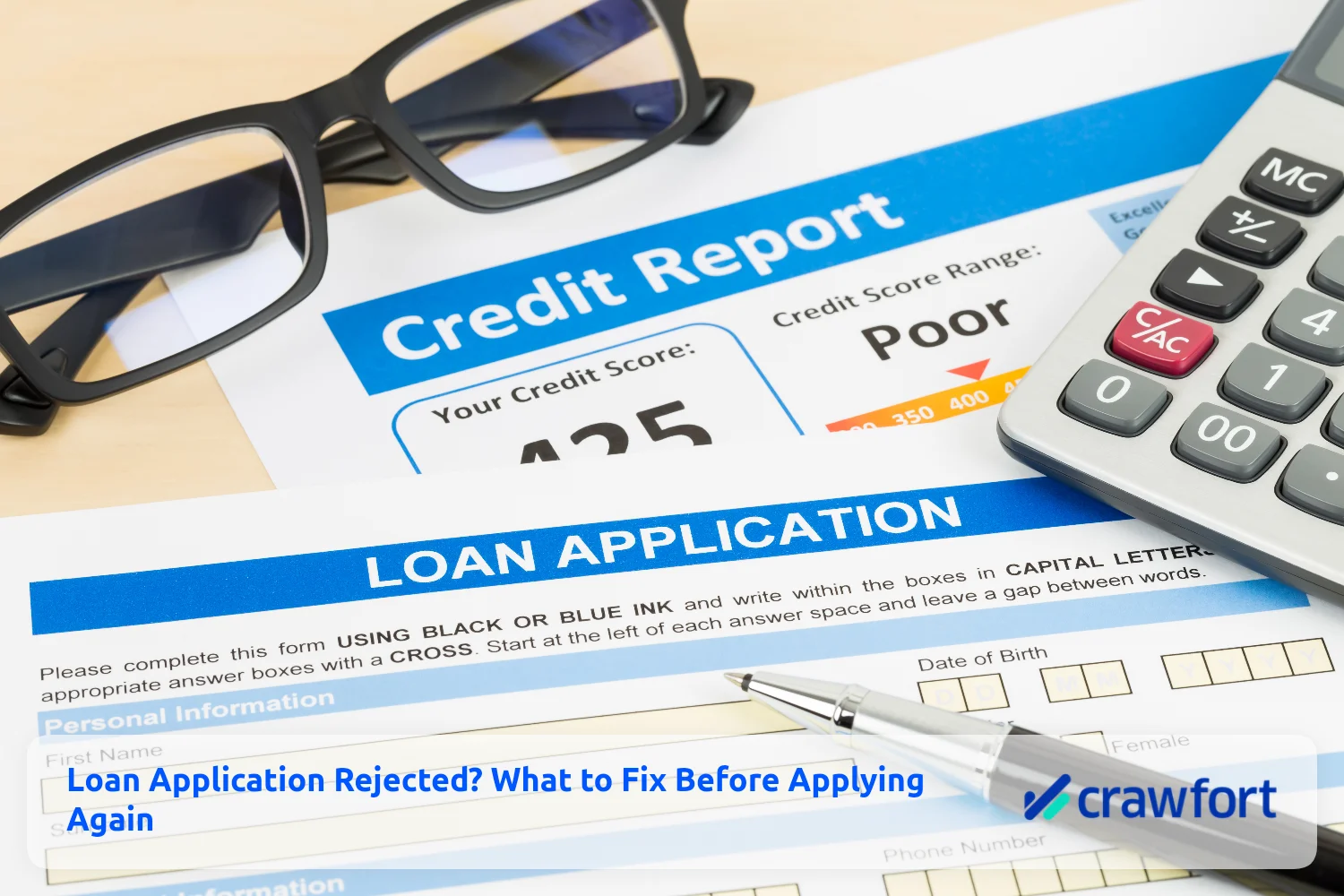
A rejected loan application can be frustrating, especially if the lender provides only a brief notification without explaining exactly why your application was unsuccessful. While it can be tempting to apply elsewhere immediately, doing so without addressing the underlying issue may reduce your chances of success.
Instead, take the opportunity to review what may have affected the decision. This could involve correcting an error in your credit report, reducing existing debt, providing clearer proof of income, or requesting a loan amount that better matches your financial circumstances. Although none of these steps guarantees approval, they can help you submit a stronger application and avoid repeating the same mistakes.
What should you fix before applying again? Start by identifying the issue that may have contributed to the rejection. The table below summarises the most common reasons a loan application may be declined, what you should review, the practical steps you can take, and when it may be appropriate to reapply.
| Possible Issue | What To Check | What To Fix | Reapply When |
|---|---|---|---|
| Weak repayment record | Late or missed payments | Bring overdue accounts up to date and maintain timely payments | Your recent repayment conduct is more consistent |
| Several recent applications | Multiple credit enquiries within a short period | Pause new applications and research eligibility first | You have addressed the original issue |
| High existing commitments | Large card balances or several monthly instalments | Reduce balances and reassess what you can afford | The new repayment fits your budget |
| Income concerns | Irregular income, recent job change or insufficient history | Build a clearer income record and provide complete documents | Your income is stable and properly documented |
| Application mismatch | Inconsistent personal, employment or income details | Correct the information and gather updated evidence | Every detail is accurate and consistent |
| Unsuitable loan request | Amount or tenure does not fit your circumstances | Reconsider the amount, product and repayment period | The request is necessary and manageable |

Table of Contents
Why Was Your Loan Application Rejected?
Lenders assess risk using their own criteria, so meeting published minimum requirements does not automatically result in approval. A lender may consider your income, employment, existing commitments, repayment history, recent applications, requested amount and supporting documents.
The rejection may therefore have more than one cause.
Your Credit History Raised Concerns
Banks and other financial institutions may use your credit report alongside information such as your income when assessing an application. According to MoneySense’s guidance on credit reports and creditworthiness, factors affecting a credit score may include late payments, credit utilisation, available credit, recent facilities and application enquiries.
A single late payment does not explain every rejection. However, repeated missed payments, accounts with outstanding arrears or high balances across several facilities may make a lender less comfortable with another repayment obligation.
If you are unfamiliar with your report, learn how to check your credit score in Singapore before drawing conclusions from the grade alone.
You may also find it useful to read How To Get A Free Credit Bureau Report In Singapore, especially if you have never reviewed your report before.
You Applied For Several Credit Facilities Recently
Submitting multiple applications after one rejection may be counterproductive. MoneySense notes that increased loan application activity is associated with credit risk, while several recently opened facilities may suggest that someone is overextending themselves.
This does not mean you must wait for an arbitrary number of months. There is no single waiting period that suits every lender or situation. The practical point is to pause until you understand what needs to change.
Your Existing Repayments Are Already High
A lender needs to consider whether you can take on another monthly repayment. Credit card balances, car financing, housing payments, education loans and other instalments can all affect the amount left from your income.
Review your actual cash flow rather than focusing only on the requested instalment. Include household expenses, insurance premiums, transport, food and irregular costs. A repayment that works only in a problem-free month may be too tight.
If you are unsure whether another repayment fits your budget, our guide on How Much Of Your Salary Should Go Towards Loan Repayments In Singapore explains how to estimate a safer repayment level.
Your Income Was Difficult To Verify
A person may earn enough but still face difficulty if the submitted documents do not show that income clearly. This can affect employees with variable allowances, commission-based workers, freelancers, self-employed applicants and people who have recently changed jobs.
Common gaps include outdated payslips, incomplete bank statements, missing employment information or figures that do not match across documents. Review the usual methods of proving your income for a loan and follow the lender’s document requirements.
If you recently changed jobs, you may also want to read Can You Get A Personal Loan After Changing Jobs In Singapore?, to understand how employment history may affect an application.
The Requested Loan Did Not Fit Your Profile
A lender may decide that the requested amount or repayment period is not appropriate based on your income and commitments. Applying for a smaller amount can reduce the monthly obligation, but it is not a workaround for an unaffordable loan.
The better question is whether the revised amount would still meet your need without placing pressure on your monthly budget.
The Application Contained Inconsistent Information
Small discrepancies can slow down an assessment or raise questions. Check that your name, address, employment details, income and declared commitments are consistent across the form and supporting records.
Never change or omit information simply to improve how an application looks. Inaccurate declarations can create more serious problems than a rejection.
What To Do Immediately After A Loan Rejection
Ask The Lender For Clarification
Contact the lender and ask whether it can identify the broad reason for the decision or confirm whether any document was missing. It may not disclose its scoring method or provide a detailed explanation, but you may still learn whether the issue involved eligibility, documentation or internal lending criteria.
Do not argue for approval. The purpose of the call is to gather enough information to decide what to review.
Obtain Your Credit Report
Your credit report lets you inspect the accounts, repayment records and enquiries being associated with you. Some financial institutions also explain that consumers may obtain a free credit report within 30 calendar days of a credit-facility approval or rejection, subject to the applicable process.
You may need to check for the following:
- Whether the listed accounts belong to you
- Whether balances and account statuses appear correct
- Whether a payment is incorrectly marked late
- Whether an unfamiliar enquiry or facility appears
- Whether recently settled debt has been updated
Checking your own report is different from making another credit application. MoneySense states that self-enquiries do not affect your credit score.
Dispute Genuine Errors
If the report contains incorrect information, raise it with the credit bureau and provide supporting records. The current Credit Bureau Act provisions on correcting data include mechanisms for correction requests.
Do not dispute accurate negative information merely because it is inconvenient. If a late payment or default is correct, focus on settling the issue and rebuilding a consistent repayment history.
What To Fix Before Applying Again
Bring Payments Up To Date
Settle overdue amounts where possible and make future payments by their due dates. If managing several payment dates is difficult, GIRO or standing instructions may help, provided there is enough money in the account.
Credit improvement is generally gradual. A few punctual payments will not necessarily offset a longer period of arrears immediately.
Reduce Outstanding Balances
Paying down revolving balances can lower your commitments and free more room in your budget. Start with expensive debt while maintaining the required payments on every account.
Do not empty your emergency savings solely to make an application look stronger. Keep enough cash for essential expenses and unexpected bills.
If you are deciding whether to use your savings or borrow, compare both options in our guide to Emergency Fund vs Personal Loan before making a decision
Recalculate What You Can Afford
Write down your take-home income and essential monthly costs. Then include existing repayments and an allowance for irregular expenses. The amount left is not automatically the amount you should commit to another loan.
Also compare the total repayment, fees and tenure—not only the monthly instalment. MoneySense’s explanation of different types of loans shows why a term loan and revolving facility can produce different repayment obligations and risks.
Build A Clearer Income Record
If your income recently changed, applying again with the same short history may produce the same result. Where possible, wait until you can provide a more representative set of income records.
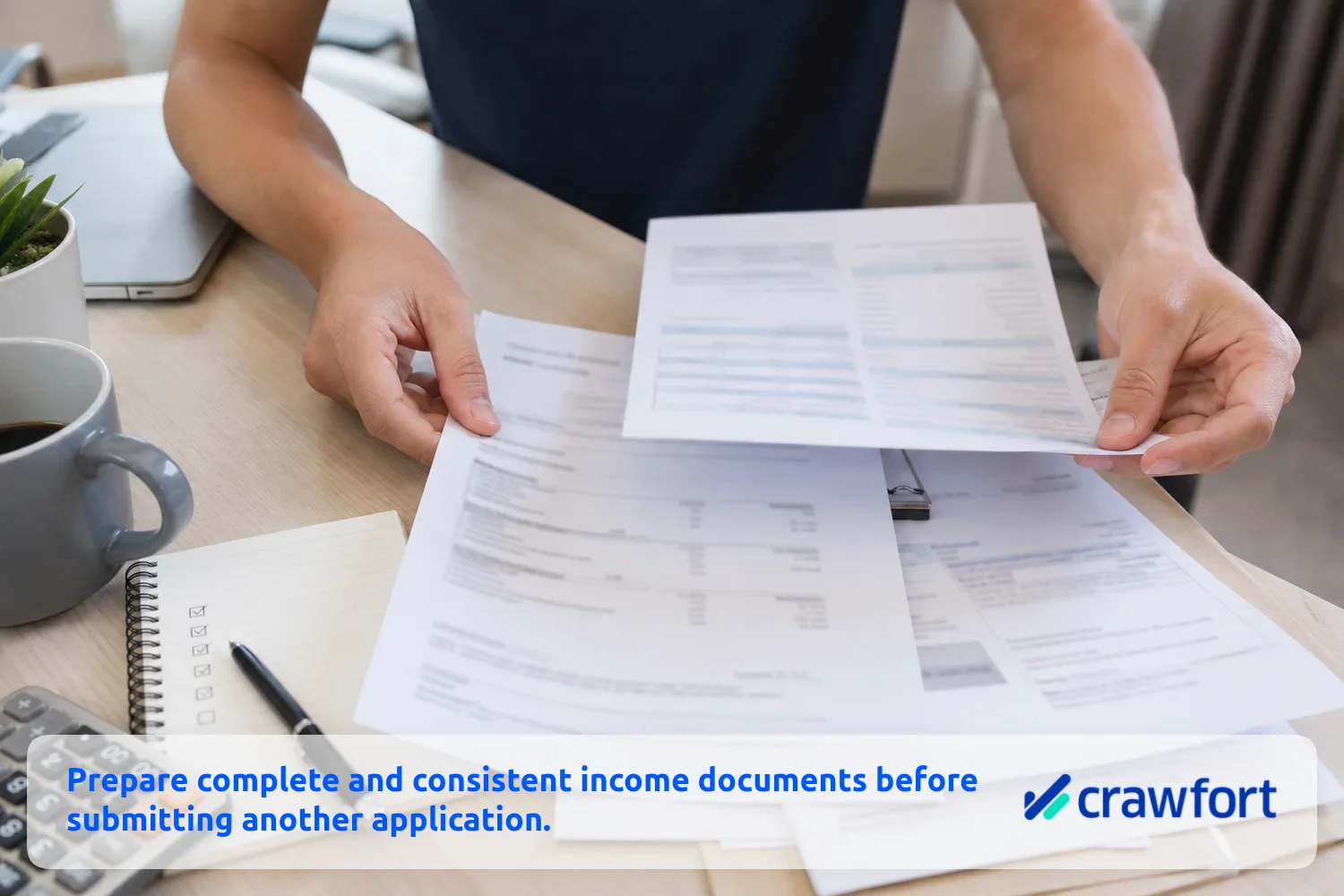
Self-employed and variable-income applicants should organise bank statements, tax records, invoices or other documents requested by the lender. Employees should confirm that salary credits, payslips and employment information agree.
Before submitting anything, check the lender’s personal-loan eligibility requirements and prepare only genuine, current documents.
Correct The Application Details
Prepare the next application from the beginning instead of copying information without checking it. Confirm your residential address, employer details, income, existing loans and contact information.
Use the same underlying figures across the form and evidence. If a figure needs explanation—for example, income varies because of commission—provide the requested supporting history rather than presenting the best month as typical.
Avoid Borrowing To Solve Unmanageable Debt
If existing repayments already exceed what you can reasonably afford, another loan may postpone the problem without resolving it. Do not take on new debt simply to meet instalments on other debts unless you fully understand the structure, total cost and risks.
Credit Counselling Singapore provides credit counselling and may facilitate suitable repayment arrangements for people facing unsecured-debt difficulties. Seeking help early can be more useful than accumulating more enquiries and repayments.
If you already have several unsecured loans and repayments are becoming difficult to manage, you may also wish to understand whether a debt consolidation loan is a more appropriate solution than taking another separate loan.
When Should You Reapply For A Loan?
You should reapply for a loan only after something meaningful has changed, such as correcting an error, reducing debt, improving your income records or strengthening your application documents. Applying again without fixing the original issue may simply lead to another rejection.
You may be in a stronger position to reapply if:
- An error in your credit report has been investigated and corrected
- Overdue payments have been settled
- Outstanding balances have fallen
- Your income records cover a more stable period
- Your application documents are complete and consistent
- The requested amount fits your budget
- You understand the lender’s basic eligibility requirements
There is no universal reapplication interval. A lender may also have its own policy for repeat applications. If nothing has changed since the rejection, another immediate application is less likely to solve the underlying issue.
Learn more:Find out how Total Debt Servicing Ratio (TDSR) can affect your next loan application.
Should You Apply With A Different Lender?
Different lenders may use different assessment criteria, but changing lenders does not remove genuine affordability, credit or documentation problems.
Compare the product carefully before applying. Check the interest rate, effective interest rate where provided, fees, repayment period, late-payment consequences and total amount payable. Confirm that the repayment remains manageable even if an unexpected expense occurs.
If you are considering borrowing from a licensed moneylender instead of a bank, learn how licensed moneylenders differ from illegal lenders in our guide to licensed moneylenders in Singapore.
If borrowing is still necessary after completing these checks, you can review the terms and eligibility information for Crawfort’s personal loan options. Approval remains subject to assessment, and you should not borrow more simply because a larger amount is offered.
If you approach a licensed moneylender, verify its business name, address and website using the Ministry of Law’s current list of licensed moneylenders before sharing personal information. Licensed moneylenders are not banks, and a lender appearing on the Registry does not mean a loan is suitable for your circumstances.
Make The Next Application A Considered One
A loan rejection is a reason to review the application, not a cue to apply everywhere else. Start with your credit report, existing repayments, income evidence and the amount you genuinely need.
Reapply only after you have corrected an error, strengthened the documents or improved the financial position that the lender will assess. If the repayment would still stretch your budget, delaying the loan or seeking debt guidance may be the safer decision.
Need a personal loan after reviewing your finances?If you have corrected the issues that affected your previous application and are ready to apply responsibly, you can explore Crawfort’s personal loan options. Our application process is straightforward, and eligible applicants may receive approval in as fast as 8 minutes.
Important note: This article is for general information only and does not consider your personal financial situation. Before taking a loan, review the loan contract carefully and make sure repayments are manageable.