

 Alwin Goh

You pay a S$300 instalment, then check your balance and find it has fallen by less than S$300. That does not mean part of your payment went missing. Some of it may have been applied to interest or a permitted fee, and only the principal portion reduces the amount you originally borrowed.
So the useful question is not “Did my balance go down?” It is “How much went to principal, how much went to interest and fees, and which balance am I actually looking at?” Your loan contract, repayment schedule, receipts and statements should let you trace every one of those figures.
Start with the five account items below. They separate the amount you borrowed from the other sums that can appear on the same account.
| Account Item | What It Means | What To Check |
|---|---|---|
| Principal | The amount borrowed. A payment allocated to principal reduces the outstanding principal. | Compare the principal portion on the repayment schedule with the figure on the actual receipt. |
| Interest | The borrowing cost charged under the contract. It does not reduce principal. | Check the rate, the amount, the crediting date and whether the payment was made on time. |
| Late Interest | Interest on an overdue amount, where applicable. It is separate from ordinary interest. | Ask which amount was overdue, from what date, and how the charge was calculated. |
| Permitted Fees | Fees allowed by law and agreed under the contract, such as an applicable late fee. | Identify the fee, the contractual basis for it and the event that triggered it. |
| Total Outstanding | Everything still owed, which may include principal, interest, late interest and permitted fees. | Do not confuse this figure with outstanding principal on its own. |
What Repayment Allocation Means
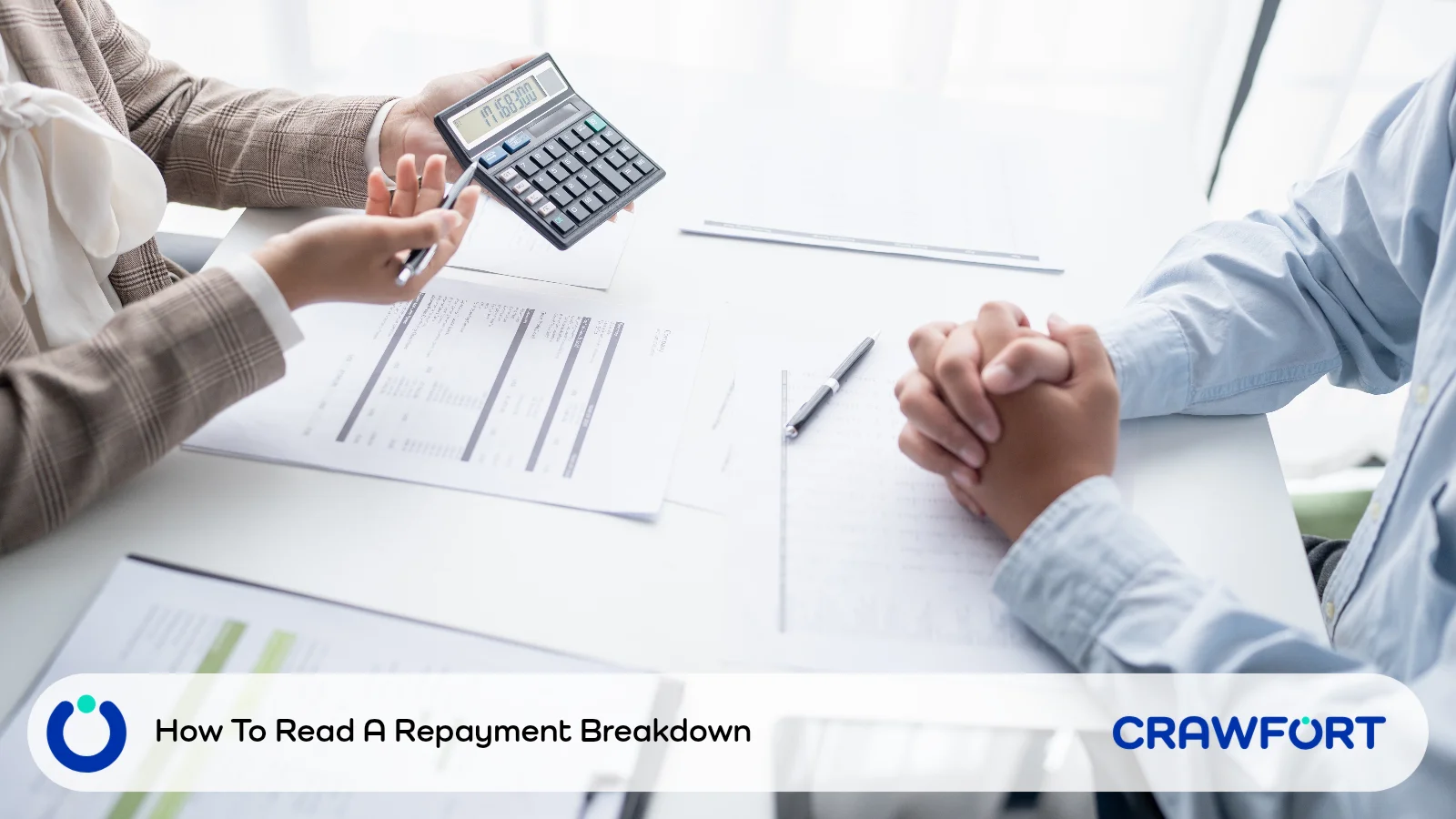
Allocation is the accounting split applied to a payment. If your instalment is S$300, the lender receives the full S$300, but its records divide that money between principal, interest and any permitted fee that is due.
Only the part allocated to principal reduces your outstanding principal. That matters because the Moneylenders Rules 2009 provide that interest is computed on the monthly outstanding balance of principal, after payments appropriated to principal have been deducted. A smaller principal portion this month means a larger interest base next month.
“Outstanding principal” and “total outstanding” therefore answer two different questions:
- Outstanding principal tells you how much of the original amount borrowed still remains.
- Total outstanding may include that principal plus any interest, late interest and permitted fees unpaid at the relevant date.
If a receipt shows only one balance figure, check its label and definition before comparing it with the previous receipt. A like-for-like comparison is essential.
Also read: How To Settle Debt With A Licensed Money Lender
Contractual Breakdown And Regulatory Requirements
The contract tells you what you agreed to pay. The law sets the disclosure, documentation and charging requirements the licensed moneylender must follow. Read the two together, but do not treat one as a substitute for the other.
What The Contractual Breakdown Should Show
Before granting a term loan, a licensed moneylender must give you written information on the instalment frequency, the instalment amount, and the portions of each instalment that will go to principal and to ordinary interest, assuming no default. The official Form 1 Note of Contract includes a repayment schedule with columns for the due date, instalment amount, principal and interest.
This is why the repayment schedule, not an advertisement or a verbal explanation, is the right starting point. A practical loan contract checklist can help you identify the figures and clauses to review before you sign.
What The Current Rules Require
The rules require actual payments to be recorded and broken down. Receipts and statements must show the portions allocated to principal, to interest (including late interest) and to permitted fees, if any. The lender’s electronic loan account book must record the same categories.
Those provisions require disclosure of the split. They do not set one universal sequence such as “fees first”, “interest first” or “principal first” for every payment on every loan. Do not assume an allocation order based on a general online summary. Check the contract and schedule, then compare them against the allocation shown on the receipt for the payment concerned.
For a non-business loan, a fee must also be permitted by the rules and agreed by the borrower. The rules currently allow a loan-grant fee of up to 10% of principal, an aggregate late fee of up to S$60 per month, and court-ordered legal costs. The loan-grant fee is usually dealt with when the loan is granted rather than through an ordinary repayment. Crawfort’s guide to interest rates and fees a licensed moneylender may charge explains these categories in more detail.
Why Allocation Affects The Remaining Balance
Suppose two borrowers each pay S$300. If S$250 is allocated to principal on one account and S$200 on the other, their outstanding principal falls by different amounts even though the cash paid is identical.
That gap compounds. A larger remaining principal produces more interest in the following period, and the total outstanding balance can look as though it is falling more slowly, particularly if interest or a permitted fee became payable during the same period.
Timing matters just as much. A receipt records the account as at its issue date. A portal viewed a week later may already include another interest crediting date, a newly overdue amount, or a payment not yet matched to the correct account. Compare the same account, the same payment date and the same balance date before concluding that two figures conflict. For a broader check on the calculation method, see how to compare loan rates, fees, tenure and terms.
Discover also: Licensed Money Lenders In Singapore: What Are Your Options If You Can’t Repay Your Loan?
A Simple Worked Example
This example shows why the split matters. It is not a universal allocation rule and not a quotation for a real loan.
Assumptions
- This is a term loan with S$1,000 of outstanding principal immediately before the payment.
- The borrower pays a S$300 instalment on time.
- Under the contract and receipt, S$250 goes to principal and S$50 goes to ordinary interest.
- No late interest or fee is due.
- There are no other transactions on the account that day.
| Calculation Step | Amount |
|---|---|
| Opening Outstanding Principal | S$1,000 |
| Payment Received | S$300 |
| Allocated To Interest | S$50 |
| Allocated To Principal | S$250 |
| Closing Outstanding Principal | S$750 |
The payment was S$300, but principal fell by S$250 because S$50 paid interest. Now change one assumption. Suppose a valid S$50 fee was also due, and the receipt allocated S$200 to principal, S$50 to interest and S$50 to that fee. Closing principal would be S$800 instead of S$750. That second split is purely illustrative; whether it applies to a real account depends on the contract, the nature of the fee and the applicable rules.
When you reproduce this calculation, use the figures printed on your own schedule and receipt. A general explanation of how to calculate interest on a loan will help you follow the arithmetic, but it cannot replace the contract-specific allocation on your account.
How To Read A Repayment Receipt
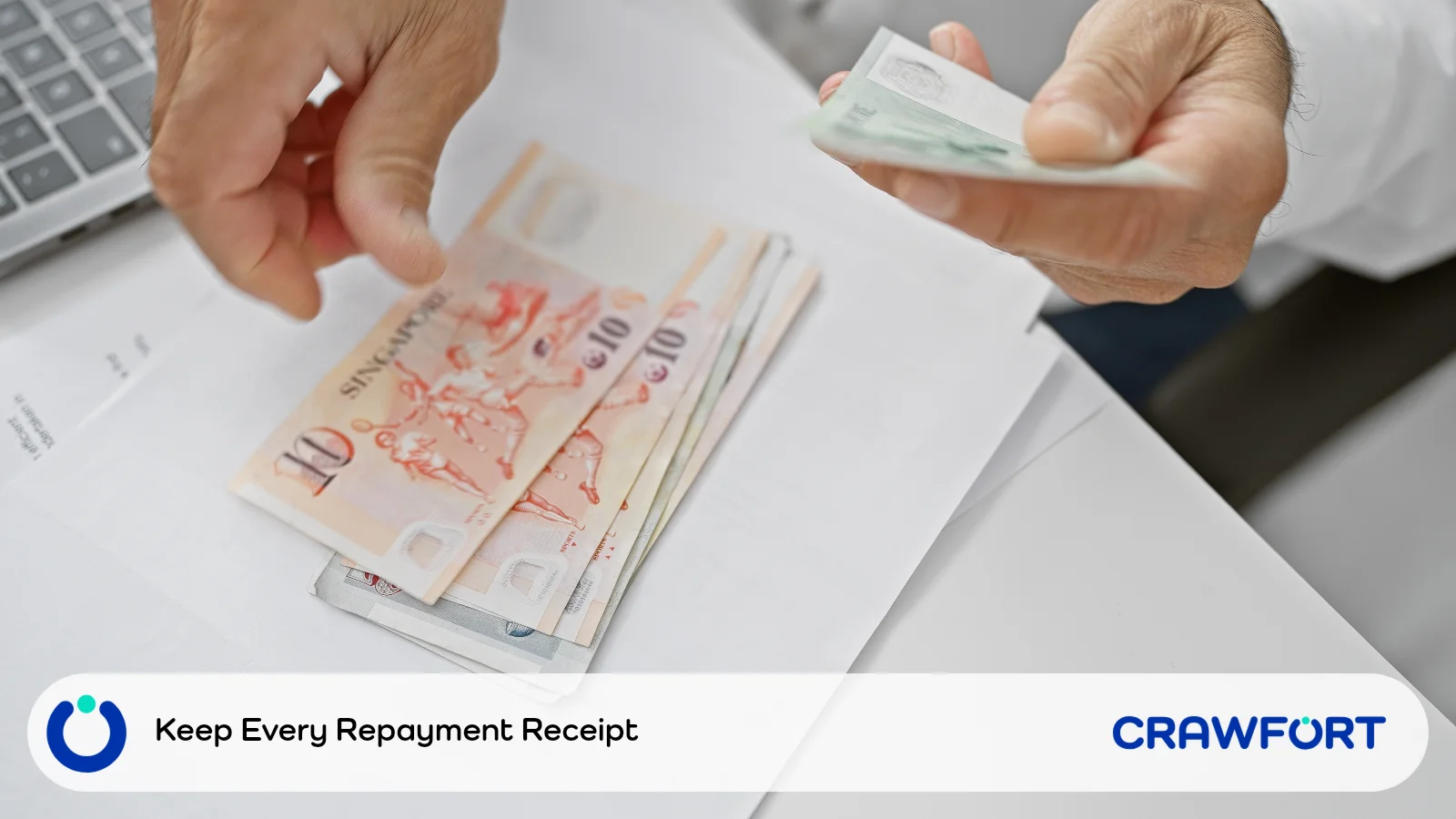
Under the Moneylenders Act 2008 and its receipt requirements, a cash payment should be acknowledged immediately. For a non-cash payment, the current Rules require a receipt within seven business days.
Check The Receipt In This Order
- Confirm the payment. Match the amount and date against your bank record, transfer reference or cash payment.
- Confirm the loan account. Make sure the account number is the one you intended to pay, especially if you hold more than one loan.
- Read the allocation. Add up the principal, interest, late interest and fee portions. They should reconcile exactly to the payment received.
- Read the balance label. Work out whether it shows outstanding principal or the total outstanding amount including other sums.
- Compare the schedule. If you paid on time, check the principal and ordinary-interest split against the scheduled instalment.
If the allocation does not add up, or the account number is wrong, raise it promptly in writing. Keep the original receipt and the payment evidence together, and do not rely on a messaging-app conversation as your only record.
How To Read A Statement Of Account
A receipt explains one payment. A statement lets you trace the account over time. The Registry of Moneylenders’ official borrower guidance says borrowers should receive statements for subsisting loans at least once every January and July, and should retain them together with all payment receipts.
The statement should identify the loan terms, list the interest and permitted fees payable, show the payments received, and break down each payment among principal, interest (including late interest) and permitted fees. It should also show the total principal, interest and fees outstanding as at the statement date.
Reconcile The Account Line By Line
- Start with the previous statement’s closing figures.
- Add each new interest item, late-interest item or permitted fee shown.
- Match every payment against your receipts and bank records.
- Deduct the principal portions from outstanding principal.
- Deduct the interest and fee portions from their respective outstanding categories.
- Compare your reconstructed figures with the statement’s closing totals.
If the loan is still subsisting and you need a statement for a specific period, the Act also provides a written-request route. A borrower, surety, former borrower or former surety may apply for a statement covering a specified period, subject to the prescribed processing fee and time limits.
Questions To Ask When The Balance Looks Wrong
Ask for a written, line-by-line reconciliation rather than a new total with no explanation. These questions keep the discussion specific:
- What was my outstanding principal immediately before this payment?
- How much of this payment was allocated to principal, ordinary interest, late interest and each fee?
- Which contract clause and repayment-schedule line support that split?
- If a fee was charged, what is it called, when was it triggered and how was it calculated?
- Does the balance on this receipt represent principal only, or the total of principal, interest and fees?
- Were any interest or fee entries added between the previous balance date and this receipt date?
- Has my payment been matched to the correct loan account and value date?
- Can you provide an updated statement showing every payment and allocation from the start of the loan?
- If the account is fully paid, can you confirm in writing that all dues are settled and the account is closed?
Before You Check Your Next Payment
Repayment allocation is not a hidden process. It is written into your contract, printed on your receipt and summarised on your statement. Once you know which balance you are reading, a payment that seems to have shrunk usually turns out to be an ordinary split between principal, interest and a permitted fee.
Keep every receipt, reconcile each statement against your bank records, and raise any discrepancy in writing while the paperwork is still fresh. If the instalments themselves are becoming difficult, deal with that early rather than borrowing again to cover a shortfall. A debt consolidation loan or a conversation with a reputable debt counsellor is a safer starting point than an additional loan.
Want a lender that shows you the numbers upfront? Apply for a personal loan with Crawfort and get approval in as fast as 8 minutes, with a clear repayment schedule, an itemised breakdown of every payment, and no hidden charges. You can also review our licensed money lender loan terms before you apply.
Important note: This article is for general information only. It does not consider your personal financial situation and does not provide legal advice. Review your loan contract and account documents carefully. If repayments are already unmanageable, avoid taking another loan simply to cover the shortfall, and consider seeking independent debt help.



