Alwin Goh
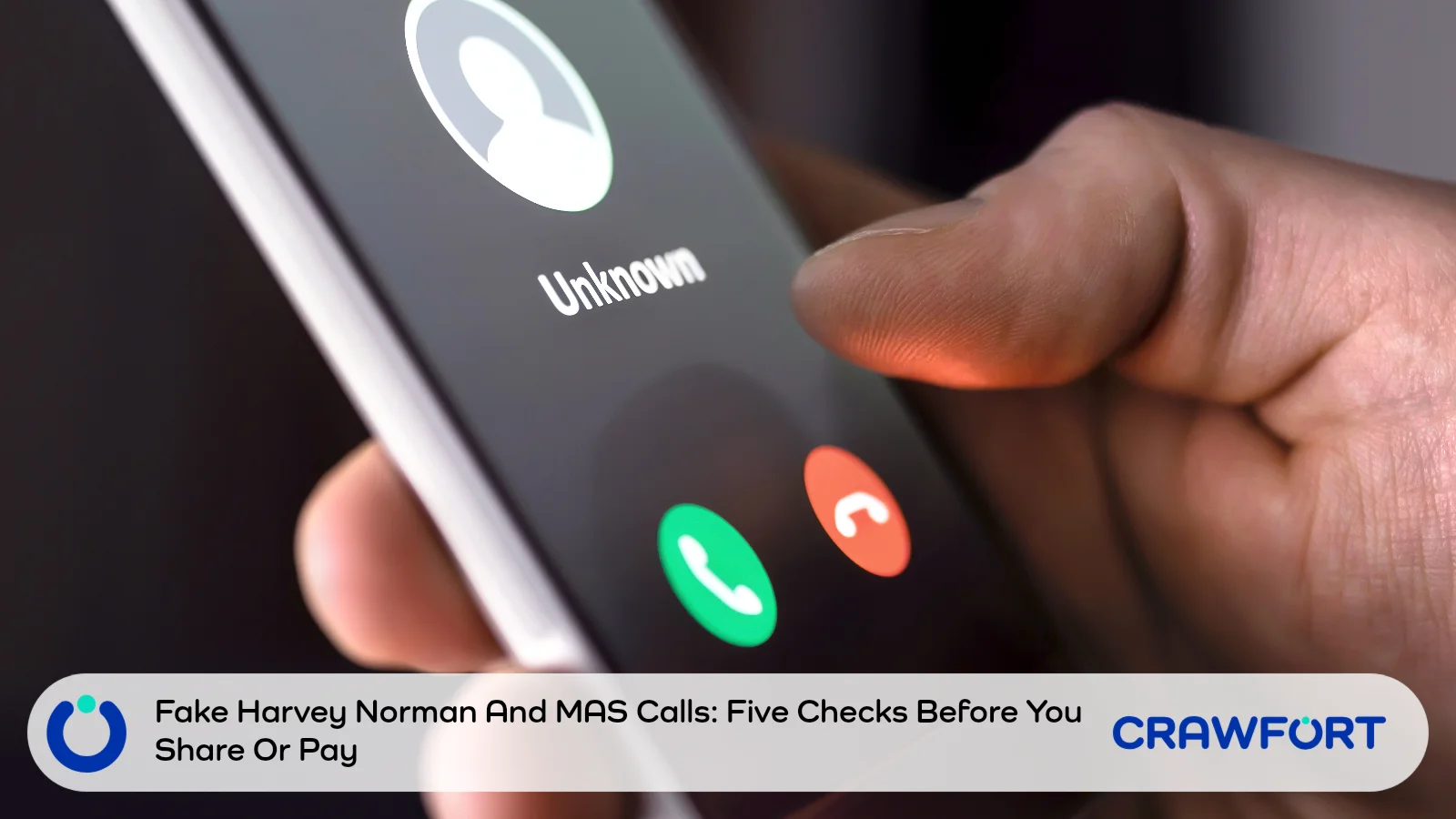
Two Malaysian men, 25 and 26 years old, were due in court on 21 October 2026, about a week after a 40-year-old woman here got a call about a Harvey Norman delivery she knew nothing about. Within a day, that call had turned into what she believed was a Monetary Authority of Singapore (MAS) investigation. It ended with her meeting a man outside her home and giving him S$3,500 in cash plus roughly S$20,000 worth of foreign currency and jewellery.
Police say they’ve seen this same pattern, where a fake retailer call hands you over to a fake MAS officer, in at least 119 cases since January. If there’s any good news, it’s that every stage of the script gives you a chance to back out, and the woman in this case had several of them.
The table below pairs the most common requests with what we’d check first.
| When The Caller Asks You To | Your Next Check |
|---|---|
| Resolve an unfamiliar delivery | Check with the retailer through its official channel |
| Speak to a supposed MAS officer | End the contact and verify separately |
| Share your banking screen or login | Stop before opening or exposing banking information |
| Approve a transaction | Read its purpose without the caller directing you |
| Hand over cash or jewellery | Stop the handover and seek help |
Table of Contents
- What Happened In This Case?
- How Big Is This Scam Variant?
- Check 1: Is There Really An Order?
- Check 2: Who Is This MAS Officer, Really?
- Check 3: Nobody Needs To See Your Banking Screen
- Check 4: What Exactly Are You Approving?
- Check 5: Officials Don’t Collect Cash Or Gold
- Already Shared Details Or Paid?
- What This Case Shows
- Frequently Asked Questions
What Happened In This Case?
The first call came on 13 October, according to the Singapore Police Force (SPF) news release of 20 October 2026. The man on the line said he was from Harvey Norman and was following up on a delivery. When she told him she hadn’t bought anything, he said her identity might have been misused and that he’d file a police report on her behalf.
On 14 October a second “Harvey Norman” caller helped her cancel the orders and suggested she get in touch with MAS. She did, over WhatsApp, where two people claiming to be MAS staff asked her to share her screen and log in to her bank accounts, supposedly so they could check on them. From there the asks kept growing, her internet banking credentials and OTPs first, then approval for every transaction in her accounts, then photos of her jewellery and cash, which she was told to pass to a representative for “further checks”.
It was only when she went down to MAS in person that she found out none of the people she’d been talking to worked there.
Cyber Command officers identified the man who met her and arrested him on 19 October, together with a second man. Police say the second man had 17 pieces of gold jewellery on him that they believe came from scams, and a raid on a budget hotel afterwards turned up S$55,000 in cash and another 24 pieces of gold jewellery. Both were to be charged with abetment by conspiracy to assist another person to retain benefits from criminal conduct, an offence that carries up to 10 years’ jail, a fine of up to S$500,000, or both. Nothing has been proven in court yet.
How Big Is This Scam Variant?
This wasn’t the first warning. In a 21 September 2026 advisory, police said at least 119 cases involving people posing as Harvey Norman staff had been reported since January, with at least S$4.8 million lost (as of September 2026).
Details shift a little from case to case, but the bones stay the same. Usually it’s a TV you supposedly bought, or a delivery waiting to be confirmed. Deny it and you’re told someone has misused your details, after which you’re put through to an “MAS officer” who says you’re linked to money laundering. Some victims are then told to move money into a “safe account”, while others are asked to withdraw cash, buy gold bars or bring along jewellery and luxury watches to hand over, on the understanding that it’ll all come back once the “investigation” wraps up. Most only realise after several transfers, when the promised refund never arrives.
Also read: how small parcel redelivery charges can lead to card fraud.
Check 1: Is There Really An Order?
Nothing about a surprise order has to be settled on that first call. Hanging up and opening your own purchase history (the retailer’s app, or the receipts in your email) will tell you more in two minutes than the caller will in twenty, and if there really is something to sort out, the retailer’s own website will have a number you can trust.
Harvey Norman’s security alerts page lists the fake calls, requests for personal information and forged invoices that have gone out under its name, including an April 2026 notice showing a fraudulent invoice on a copied letterhead. A document with the company’s logo on it, in other words, says very little about who’s actually on the line.
It’s worth asking the retailer whether the order exists at all before getting into how to cancel it, and doing that through a number you looked up rather than one the caller read out.
Check 2: Who Is This MAS Officer, Really?
In the October case, the “MAS officers” came through WhatsApp on a referral from the second caller. That handover is where a lot of people relax, because it feels like being escalated to someone senior, but the next person is usually just another member of the same group.
ScamShield’s page on government official impersonation scams says officials won’t ask you to transfer money or give out bank login details over a phone call. It also notes that scammers sometimes quote your name or NRIC number to seem legitimate, which is why a caller knowing your details shouldn’t count for much.
Unsure? The 24/7 ScamShield Helpline is 1799. You’re free to hang up on the “officer” before you ring it, since a genuine one wouldn’t need you to stay on the line.
Check 3: Nobody Needs To See Your Banking Screen
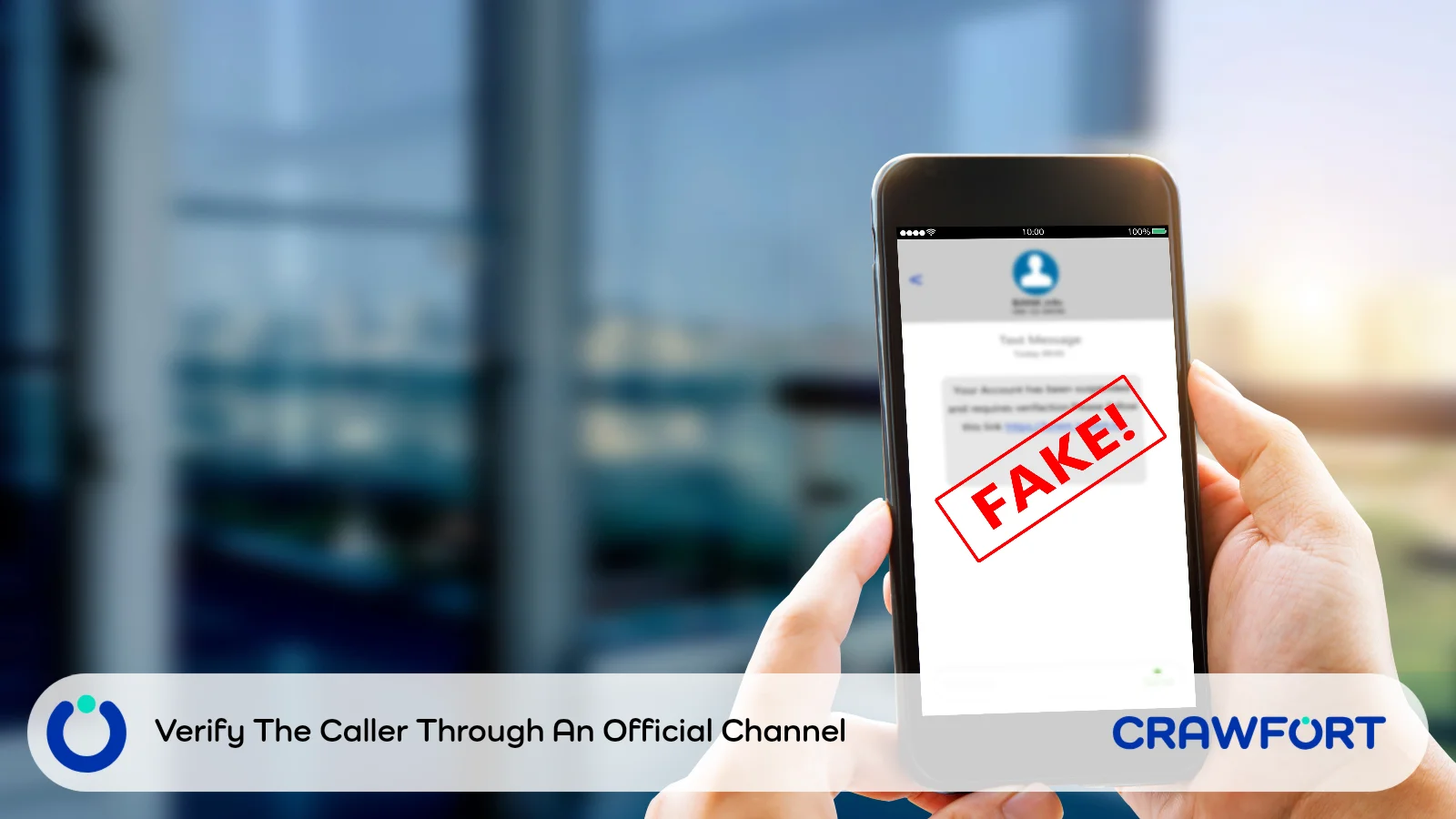
Of all the requests in this case, the screen share probably gave the scammers the most. Once they could watch her bank app, every login and every OTP that popped up was visible to them, so they rarely had to ask for anything twice.
Banks send OTPs so that only you can approve something, and that protection is gone the moment the code is read out, typed into a chat or left showing on a shared screen. Calling it a “verification code” doesn’t change that.
If an account genuinely needs checking, end the suspicious call first and ring your bank yourself afterwards. You’re under no obligation to explain why to the caller, or to win them over.
Check 4: What Exactly Are You Approving?
She was told to approve every transaction in her accounts, which is exactly the kind of instruction that should make you slow down. Most banking prompts show at least the amount and who’s receiving it, and if those don’t line up with a payment you actually meant to make, it shouldn’t go through, whatever the person on the phone says it’s for.
Some callers will talk you through each screen, describing the transfers as “protecting” or “checking” your money. Needing that running commentary to understand a prompt is a good sign to close it and ask the bank directly.
Tapping the button yourself doesn’t make a payment safe, either. In the first half of 2026, 80.8% of reported scam cases here involved transfers that victims made or approved themselves.
Learn more: why payments victims approve themselves still drive most scam losses.

Check 5: Officials Don’t Collect Cash Or Gold
By the time a scam reaches the point where someone comes to your door, it’s had a day or more to build trust, so the meet-up can feel like the official part rather than the suspicious one. Police said the two men in this case had been tasked by unknown people, believed to be part of a transnational syndicate, to collect cash and valuables from victims and pass them on.
Police have also been explicit that government officials will never ask you to hand over cash, gold or luxury watches, and won’t transfer your call to the police or any other official. A request to meet up, photograph your valuables or leave them somewhere for collection is a reason to stop right there. If someone is already waiting nearby, it’s safer not to confront them, and you can call 999 if you need help urgently.
Already Shared Details Or Paid?
Missing one of these checks doesn’t mean it’s too late for the rest. ScamShield’s guidance for people who’ve been scammed puts contacting the bank and filing a police report at the top of the list.
- Call your bank straight away and tell them exactly what was shared, whether that’s login details, OTPs, approved transactions or a shared screen, so they know which accounts to lock down.
- File a police report with the call and message details, your transaction records and the place where any handover happened. Screenshots help, though they can wait until after you’ve spoken to the bank.
- Let someone you trust know. Having another person beside you while you make these calls makes the whole thing a lot less overwhelming.
The refund the caller promised isn’t coming, so there’s no reason to wait for it. Anyone with information about these scams can also call the Police Hotline at 1800-255-0000. Moving quickly can limit further losses, although there’s no guarantee the money will be recovered.
What This Case Shows
Looking back at the timeline, none of the individual requests sounded outrageous when she received them, and that’s partly how the scam worked. Cancelling a delivery led to contacting MAS, contacting MAS led to the screen share, and by the time the collector turned up the whole thing had its own momentum.
Stepping outside that conversation, even for ten minutes to call the retailer or your bank on a number you found yourself, is usually enough to break it. That’s true even if you’ve already gone along with part of it.