Alwin Goh
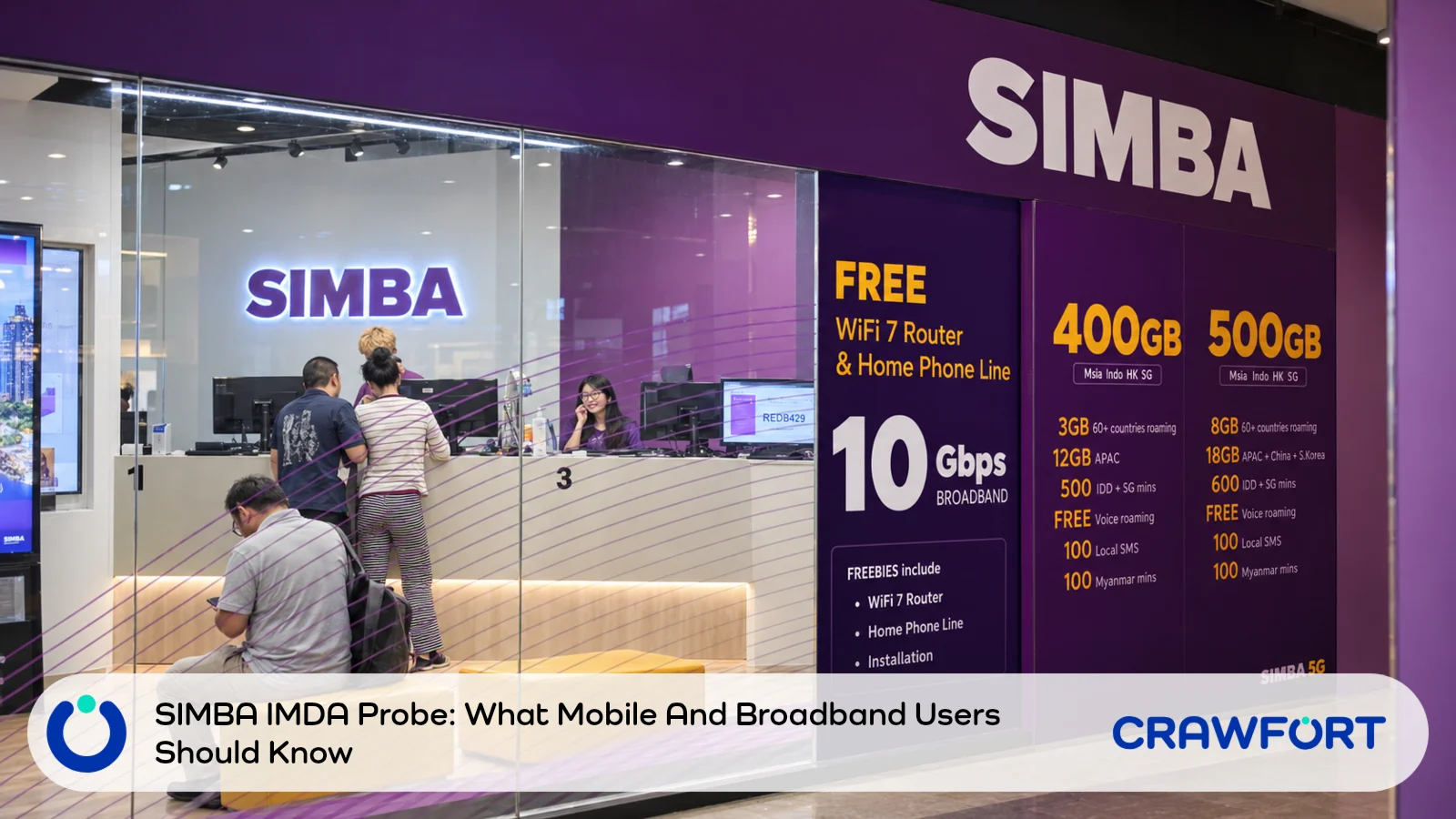
SIMBA Telecom has until 16 November 2026 to respond to a show cause notice from the Infocomm Media Development Authority (IMDA) over alleged unauthorised use of radio spectrum. The notice reached the telco on 23 October. In the worst case, it could lose its licence.
Customers haven’t felt any of this yet. On 26 October, SIMBA posted that services, plans and wallet balances were untouched, which AsiaOne picked up on 27 October. IMDA, for its part, hasn’t said whether it will act at all.
So where does that leave you if you use SIMBA for your phone, or you were about to sign up for its fibre? We went through the reports and the contract summaries so you know which bits actually matter.
| Issue | Position As At 30 October 2026 | What To Check |
|---|---|---|
| Regulatory process | SIMBA must respond to the notice by 16 November | Look for an official decision after the response |
| Existing services | SIMBA says services, plans and wallet balances are unaffected | Check your account and actual connection |
| Home broadband | The spectrum allegations concern mobile radio use | Any wider effect depends on the scope of regulatory action |
| New contracts | A longer commitment can make a voluntary exit expensive | Read the minimum term, charges and equipment conditions |
Table of Contents
What Has IMDA Alleged?
The news first came out through SIMBA’s Australian parent, Tuas Limited, which disclosed the notice in a filing on 26 October. An IMDA spokesperson later confirmed to AsiaOne that SIMBA had been told of the investigation findings on 23 October.
Spectrum sits at the centre of it. The older complaint goes back to 2022 and 2023, when SIMBA allegedly ran 4G alongside 5G on its 2100MHz band at about 133 sites, on and off, though its permission for that band covered 5G only. The second one stretches much longer. IMDA says about 92 sites used the 2340–2360MHz band, which SIMBA had no authorisation for, at intermittent periods from 2023 right up to 2026.
The regulator believes neither was an accident. In its view, senior management approved both spectrum uses. It also says SIMBA had 5G indoor equipment running at two locations in 2023 before getting the green light, and that the telco deliberately held back some of the documents it was ordered to produce. Governance is on the list too.
None of this started last week. The probe went public in May 2026, when IMDA paused its review of SIMBA’s planned S$1.43 billion purchase of M1’s telecoms business. Tuas called off that deal on 22 May.
It’s worth being clear on one point. A show cause notice isn’t a verdict, just SIMBA’s chance to argue why IMDA shouldn’t act, and the telco says it will reply in time.
What Penalties Could SIMBA Face?
Money is one route. IMDA can fine SIMBA up to S$1 million, or 10% of yearly turnover from the relevant part of its business if that comes to more, with the figure drawn from its latest audited accounts. Nobody has been fined yet, as of 30 October 2026.
The spectrum rights themselves could be suspended or cancelled. Beyond that, IMDA has the power to act on the licence, either in full or in part. It might cut the licence period short instead, or simply attach extra compliance rules.
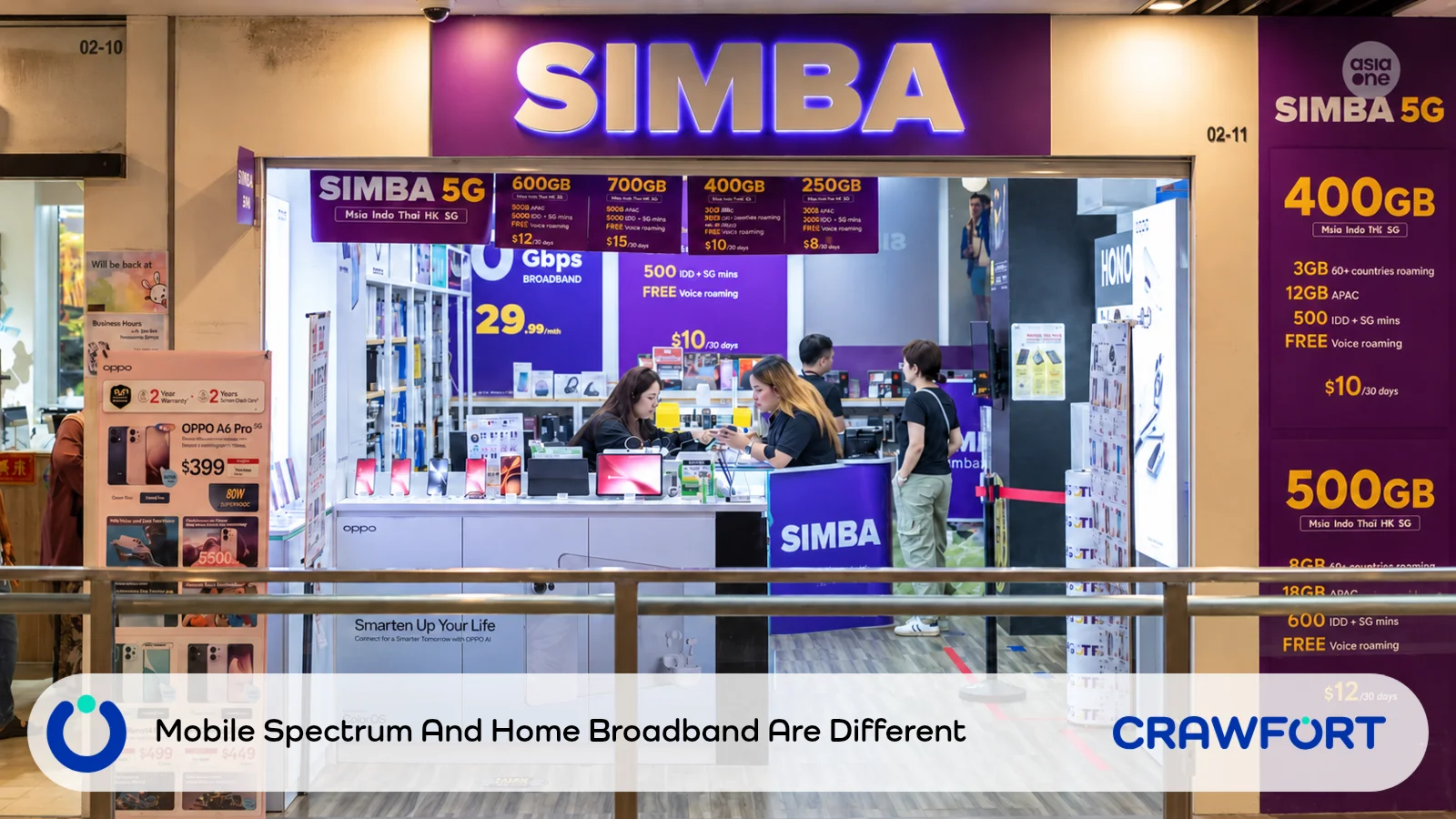
Your Fibre Line Isn’t The Same As Your Mobile Signal
Your phone talks to the nearest mobile tower using radio frequencies. Home fibre doesn’t. It comes into your flat through a physical line, so the frequency bands in dispute have nothing to do with carrying it.
Why does that matter? A penalty aimed at one spectrum right would mostly be a mobile problem. A decision touching SIMBA’s whole operating licence is another matter, and you’d have to read it to see if fixed broadband falls inside.
The notice doesn’t say anyone’s home internet will be cut. Still, different technology isn’t a guarantee either way. What happens to your fibre would depend on how any final order is worded.
Back in July, the Ministry of Digital Development and Information said in a parliamentary reply on 7 July that IMDA would make sure SIMBA keeps meeting its licence obligations and service commitments to subscribers. That was about how things would run during the probe. It doesn’t tell us how the case ends.
On SIMBA Already? Don’t Rush To Cancel
Plenty of people read a headline like this and want out straight away. If your line works fine and you’re happy with what you pay, though, leaving in a panic could cost you more than staying. Nobody’s headline will mention your exit charge, or what becomes of a leftover wallet balance.
Screenshot Your Account Now
It takes five minutes. Grab your plan name, renewal date, contract end date and wallet balance, plus your last few bills. Had support reply to you about refunds or termination before? Those chats are worth keeping, even if it’s just a screenshot sitting in your photo album.
We’d hold off on cancelling anything yourself if you plan to keep your mobile number. The new telco usually runs the port, and they can tell you which step comes first. While you’re on the phone with them, it doesn’t hurt to ask about your old line and whatever balance is left on it. Home phone numbers follow their own process, which you’ll need to check separately.
Log Any Dropouts
A quick note in your phone each time the connection acts up is enough. Write the date, the time and what stopped working. Is it only the Wi-Fi, or does a laptop plugged straight into the router lose the line too? That one test tells support a lot. For mobile, the useful detail is where it happened (say, a particular MRT stretch or your void deck) and whether you lost calls, data or both.
Send that to support and get a case number back. It gives them something concrete to fix. A one-off dropout, by the way, isn’t proof that the spectrum issue is to blame.
Some households can’t afford a dead line, such as when you’re on work calls from home or checking in on an elderly parent. A cheap backup makes sense there. Try it out before an emergency, and remember to add what it costs when you compare staying against switching.
About To Sign Up For SIMBA Broadband?
You don’t need to assume the worst about SIMBA’s licence. The question for you is simpler: how long do you want to be locked in while the case is still open?
Compare The Actual Minimum Terms
As of October 2026, SIMBA’s 365-day 10Gbps broadband contract summary puts the price at S$29.99 per 30 days. After 360 days you get five days free, and that’s how the 365-day minimum term is completed.
On the longer 720-day Huawei WiFi 7 mesh plan, you pay that same S$29.99 per 30 days. Your minimum term finishes after the 24th billing cycle is paid. This one comes with a router bundle, and its equipment and promo conditions are where you’ll want to slow down.
On service charges alone, 12 paid cycles come to S$359.88 and 24 cycles come to S$719.76. These figures leave out other charges that may apply to your installation, equipment or offer. One small catch: SIMBA bills every 30 days, not by calendar month, so a year has a few more bills than you might expect.
A shorter term means you’re committed for less time. You still have a minimum contract to finish, though, and the equipment you get may be different, so ask for a written quotation for the exact offer you’re being given.
Read The Exit And Equipment Conditions
Under the Huawei plan summary, ending the contract early during the minimum term leaves you liable for the remaining billing cycles, plus certain waived amounts or charges. You also have to return the network equipment under its termination conditions.
Here’s how that plays out. Say you have 12 cycles left at S$29.99, which works out to S$359.88 in service charges alone. That isn’t a full cancellation quote, because equipment amounts and other terms can push the total higher.
There’s one question we’d want answered before signing. Suppose IMDA’s decision stops SIMBA from supplying your plan. What then? Ask the sales staff to put the answer in an email, including what you’d still owe, whether anything gets refunded and how the router gets returned. We should add that the probe on its own doesn’t give everyone a right to cancel without paying.
Speed Isn’t The Only Thing Worth Paying For
Picture your line going down on a Monday when you’ve got back-to-back Zoom calls. At that point, nobody cares about 10Gbps. What you want to know is how quickly someone picks up, who handles it when the first fix fails and whether a fault that keeps coming back ever gets escalated properly.
Collecting keys to a new HDB flat soon? Lucky you if there’s time, because you can shop around for shorter contracts and earlier installation slots. Needing the internet on day one is different. In that case, we wouldn’t pay anyone until they’ve confirmed the activation date in writing.
Staying Can Cost Less Than It Looks
A fair comparison needs both options measured over the same stretch of time. The number that matters includes more than the monthly subscription.
To get the real cost of switching, start with your exit charges and the new plan’s fees. Throw in setup and equipment, plus any weeks you’ll be paying for two lines at the same time. Then subtract whatever credits you’ve actually been promised.
Here’s a rough example. Picture a rival plan at S$10 more every 30 days. Across 24 cycles, the gap reaches S$240, and that’s before setup, exit fees or any promo. We made these numbers up to show the sum, so swap in your own quotes.
Billing cycles can trip you up here. SIMBA charges every 30 days, but another telco may bill by calendar month, so over a year you could get 13 bills from one and 12 from the other. Lay both out across the same dates on your calendar. While you’re at it, count the days when you’ll be paying for the old line and the new one together.
Price isn’t everything, of course. A retiree who mostly streams dramas might be fine on the cheapest plan with a hotspot as backup. Someone on client calls till late at night could reasonably pay more for support they can count on.
Also read: Build internet and mobile costs into your family budget
Where Things Go From Here
First comes SIMBA’s reply. After that, IMDA decides, and only then would customers get notices saying whether their particular service or contract changes. The 16 November date is simply SIMBA’s deadline to answer. IMDA hasn’t said when it will rule.
Already a customer? Your account records and exit terms are the place to start. If you’re shopping for a new plan, ask for the whole offer in writing, cancellation rules included, before you agree to any router bundle or two-year deal.
Stick to the things you can check for yourself. That means the speed you really need, what you’ll pay in total, how long you’re locked in and what leaving costs on paper. Should IMDA’s decision change any of that, look at it again.